Afford Anything®

  • Start Here
    • About
    • Team Afford Anything
    • Media
    • Questions?
  • Blog
    • Binge
  • Podcast
    • Binge
    • Sponsors
    • Ask a Question
    • Guest Guidelines
  • Community
  • TV
  • Explore
    • Your First Rental Property
    • Travel
    • Start a Blog
    • Earn Extra Income

Category: Self-Improvement, Psychology and Mindset

November 9, 2020By Erin @ Team Afford Anything

#284: The Psychology of Money, with Morgan Housel

Do you wrestle with the idea of leaving your savings in an account earning next to nothing versus investing it in the stock market?

Do you use investment strategies that allow you to work with your nature, rather than against it?

Are you careful to seek investment advice from those who share your investment goals, or do you get caught up in the trends of day traders?

Morgan Housel, author of The Psychology of Money, joins us to discuss why investing is not the study of finance, but the study of how people behave with money. Morgan is an award-winning financial journalist, former columnist for the Wall Street Journal and The Motley Fool, and one of the foremost thinkers in the world of investing.

As a long-term investor who shares our buy-and-hold philosophy, Morgan has behavioral finance insights that can help us invest for financial independence with more clarity and a better understanding of ourselves.

We discuss how to develop self-awareness around biases, the importance of flexibility for long-term strategies, saving like a pessimist and investing like an optimist, becoming durable in the face of market adversity, the key difference between patience and stubbornness (and how it affects your mindset), expectation management, the importance of bonds and emergency funds, and a difficult lesson about tail risks that Morgan learned at age 17.

Keep reading...

October 14, 2020By Erin @ Team Afford Anything

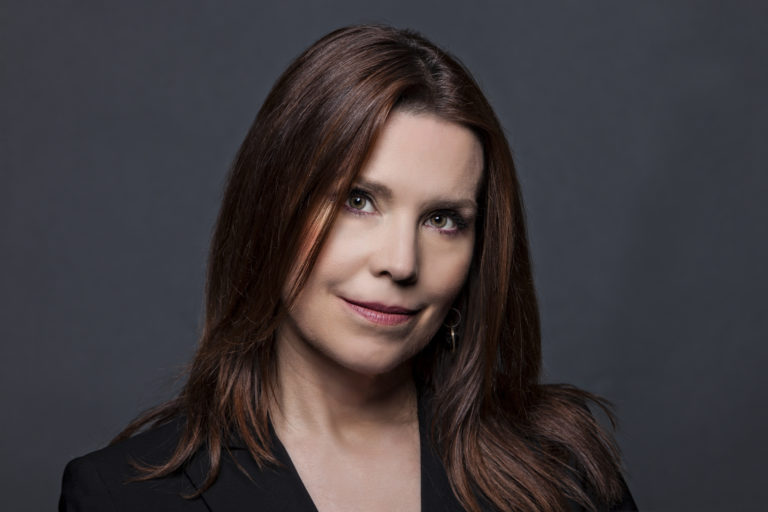
#281: The Art of Decision-Making, with Annie Duke

How many times have you made a decision – big or small – only to regret it later?

            “I wanted to fund my IRA this year, but that vacation was calling my name…I should have known better. Now I feel behind.”

            “I really wanted to take that out-of-state job, but I talked myself out of leaving my family and friends behind. Now I’m unhappy thinking about what could have been. How stupid of me.”

            “Ugh, I knew I shouldn’t have eaten all this ice cream, but it was too good to put away. What was I thinking?”

But…how could you have known?

We can’t make decisions with 100 percent certainty. Therefore, we can’t know how something will turn out.

Yet most of us get stuck in analysis paralysis, desperate to gather as much information as we possibly can before making a decision.

And when that decision doesn’t turn out as we hoped, our response is, “I should have known!”

How can we break this cycle? How can we accept that we don’t have total control over the outcomes of our decisions? How can we forgive ourselves, and others, for not getting it right?

Most of all: how can we improve our decision making skills to avoid this scenario in the first place?

That’s what today’s guest, Annie Duke, best-selling author of Thinking In Bets, is here to tell us.

Keep reading...

October 2, 2020By Erin @ Team Afford Anything

#279: How to Avoid Financial and Life Disasters, with Dr. Gleb Tsipursky

What process do you use to make decisions?

“Uhh … I put together a pros and cons list!”

“I harness my awesome spreadsheet skills and work out the variables in cells.”

“I ask others for their opinions and seek information from people who have been in my shoes.”

All of these tactics are common decision-making techniques…but they’re not processes.

What happens when you get stuck on a critical decision that you need to make quickly?

Does the intensity of the situation get the best of you? Do you make the decision based on your gut reaction? Or do you work calmly through a list of techniques that will help you arrive at a well-informed decision?

If you rely on your instincts in the heat of the moment, that’s natural. But it won’t lead to the best outcome, and it lacks process.

Today’s guest is here to share two decision making processes that can help you cut through the noise and arrive at a well-thought out decision. If you love practical guests with information that you can apply right away, you’ll love this episode.

Keep reading...

September 15, 2020By Paula Pant

#276: Cut the Fluff and Become a Digital Minimalist, with Dr. Cal Newport

Have you found yourself mindlessly scrolling through social media feeds over the last few months? Have you also found yourself in a state of sadness, anxiety, or aggravation afterwards?

We live in an increasingly noisy world. A world in which many of us use social media, or the internet in general, to escape. But our escapes often leave us feeling empty and annoyed at ourselves for wasting several hours of precious time.

Here’s one possible remedy for this tiring, relentless cycle: embrace the philosophy of digital minimalism.

            Okay, I’m in. But…what’s digital minimalism? 

Digital minimalism is a term coined by Dr. Cal Newport, today’s guest.

Keep reading...

September 4, 2020By Paula Pant

#274: Finding Hope and Happiness in a Confusing World, with Mark Manson

It’s September! If you’ve listened to any episode in the last month, then you know that I’m on round two of what I’ve dubbed my September Sabbatical, otherwise known as my yearly time to take a break from podcast production.

We’re not leaving you hanging, though. Instead, we’re digging through the archives and airing some of my favorite interviews on the show. Enjoy!

What does it take to create a sustainable sense of hope?

That’s the question that I invited Mark Manson, megabestselling author of Everything is F*cked and The Subtle Art of Not Giving a F*ck, to answer on this episode.

While we published this episode one year ago, the question of how to create hope remains as pressing as ever.

Mark says that three basic factors contribute to a sense of hope:

  1. Autonomy
  2. Purpose
  3. Community

Mark and I keep these three factors in mind as we discuss how to define success, find new challenges, and choose what’s meaningful in life. We touch on the importance of emotional regulation and avoiding crises of hope. And we talk about how they relate back to the financial independence retire early (FIRE) movement.

Keep reading...

August 7, 2020By Erin @ Team Afford Anything

#269: How to Ask Better Questions, with Charles Duhigg

Are you scared to take the first step toward the habits that you want to build?

Do you believe in your ability to change?

Or are you completely lost as to where to start?

Charles Duhigg, the Pulitzer Prize-winning journalist and author of the best-selling books The Power of Habit and Smarter Faster Better joins us on today’s show to tackle these questions.

On his podcast, How To!, Charles explores the “why” behind our habits and helps listeners overcome life’s biggest challenges. Among them, finding a new career before it’s too late, walking away from an impossible parent, fighting racism in your town, and saying the right thing at the worst time.

Keep reading...

July 14, 2020By Erin @ Team Afford Anything

#265: Personality Isn’t Permanent, with Dr. Benjamin Hardy

Who will you become in five years? 

Will you be the same person you are today, living a similar lifestyle? 

Or will you be a radically different person, with contrasting beliefs, goals, and preferences? 

According to research, most of us believe that we’ll maintain the same beliefs, goals, preferences, and behavior as our past selves. We believe that we’ll continue to plod along the trajectory our past selves set, destined for the same end-goal. 

That belief is flawed, and in some cases, downright wrong. 

Our personality is constantly evolving. The person we are today is not the same person we’ll be in five years. 

            What? That’s silly. I’m me either way, aren’t I?

Think about it this way: are you the same person you were five years ago? Ten years ago? Fifteen years ago?

Of course not. Things in your life have changed: your interests, hobbies, decision-making process, and habits are different than they were a decade ago. 

Past you ≠ present you. Present you ≠ future you.

Keep reading...

June 29, 2020By Erin @ Team Afford Anything

#263: How to Build Financial Resilience in 2020, with Dr. Brad Klontz, financial psychologist

Brad Klontz - Afford Anything PodcastDo you feel like you’ve spent the last few months on an emotional rollercoaster? Especially with your finances?

Many of us have experienced one — if not all — of the following situations since March:

  • Volatility in the stock market rattling our retirement portfolios
  • Inconsistent and sometimes delayed unemployment benefits
  • Uncertainty around employment, including reduced hours, reduced pay, furloughs, and safety issues
  • Fears about our own health and safety
  • Fears about the health and safety of loved ones

It’s been a tough year, and we’re only halfway through it.

Today’s guest has insights and actions to help you build financial resilience in 2020. Not only will you emerge from the events of this year stronger, you’ll also face future personal challenges and economic downturns with more confidence and knowledge.

Keep reading...

May 14, 2020By Paula Pant

PSA Thursday: How Can I End 2020 in a Stronger Position Than I Started It?

Welcome back to PSA Thursday, a mostly-weekly segment in which we talk about how to handle money, work, and life in the middle of a pandemic.

Today, our discussion focuses on work. 

How can you find business and investment opportunities in today’s tough pandemic bear market? 

What should you do to emerge from 2020 stronger than you started?

We tackle this question in today’s PSA Thursday episode. Here are 7 specific, immediate actions that can set you up to succeed in this recession.

#1: Keep your plans intact.

Don’t rewrite your life plans based on fear or anxiety. 

Keep reading...

May 3, 2020By Erin @ Team Afford Anything

#255: How Your Personality Affects Your Finances, with Dr. Sarah Stanley Fallaw

When a crisis hits, do you stay calm and collected, or do you launch yourself down a rabbit hole of worry and worst-case scenarios? 

When the stock market spirals downward, do you shrug and stay the course, or do warning bells explode in your brain? 

When news of the pandemic hit, was your first instinct to form a calm and reasoned action plan, or rush to the store to buy months of supplies?

Your personality influences your reactions to these scenarios. 

Personality traits influence our thoughts, feelings and responses, which affects how we manage our money and investments. 

What personality traits are we talking about?

The Big 5 Personality Traits are conscientiousness, agreeableness, introversion/extraversion, openness, and emotional stability. 

Once we understand how the Big Five personality traits influence us, we can make better-informed, less harmful financial decisions.

Keep reading...

  • ‹
  • 1
  • …
  • 3
  • 4
  • 5
  • 6
  • 7
  • …
  • 11
  • ›

Most Popular

Inflation, Illustrated
How Much is Enough?
What if We Quit Setting Goals? (Seriously?)
The Incredible Power of 10x Thinking
  • Binge
  • Questions?
  • Contact
Join 70,000+ subscribers who get free email updates.

© 2021 Afford Anything. Designed By Wilnau Design. Built by Zach Swinehart. Disclosure

© Copyright 2011 – 2026 Afford Anything. All Rights Reserved.

Website by Zach Swinehart.

  • Start Here
    • About
    • Team Afford Anything
    • Media
    • Questions?
  • Blog
    • Binge
  • Podcast
    • Binge
    • Sponsors
    • Ask a Question
    • Guest Guidelines
  • Community
  • TV
  • Explore
    • Your First Rental Property
    • Travel
    • Start a Blog
    • Earn Extra Income

Afford Anything®

  • Start Here
    • About
    • Team Afford Anything
    • Media
    • Questions?
  • Blog
    • Binge
  • Podcast
    • Binge
    • Sponsors
    • Ask a Question
    • Guest Guidelines
  • Community
  • TV
  • Explore
    • Your First Rental Property
    • Travel
    • Start a Blog
    • Earn Extra Income