lifestyle design

  • |

    #495: Cal Newport: The Shocking Secret of Productivity

    Marie Curie won the Nobel Prize in Physics in 1903 and the Nobel Prize in Chemistry in 1911. She’s famous for her work in radioactivity.

    Lin-Manual Miranda is a songwriter, producer and director who won the Pulitzer Prize in Drama in 2016, as well as several Tony awards.

    What do they have in common?

    They lived a century apart. They innovated in disparate fields. But they shared a similar productivity practice.

    Both achieved greatness by embracing the practice of slow productivity, says Georgetown computer science professor Cal Newport.

    Slow productivity is a three-part practice, Newport explains: (1) do fewer things; (2) work at a natural pace; (3) obsess over quality.

    We’re used to thinking of productivity as doing more in a short amount of time. This flips that idea on its head, focusing on doing less, but excelling.

    Slow productivity is the practice of doing fewer tasks better.

    In this episode, Newport explains how the practice of slow productivity diverges from the normal ways that people in modern society tend to work.

    If you’ve ever been challenged by the increasing demands of a fast-paced world,

    Life can be stressful. Your to-do list might feel never-ending. This episode can help you focus on the few things that matter most.

    It can help you feel less stressed, less busy, and yet — paradoxically — more productive, at the same time.

    Enjoy!

  • | | | | |

    #489: Ask Paula: What to Do with a Six-Figure Windfall?

    Cara made $100,000 in commissions this year, her biggest bonus ever. What should she do with the money if she wants to retire early?

    An anonymous caller and his partner have lived in an RV for years. They’re ready to settle. Should they sell most of his investments to purchase raw land and build an off-grid home?

    Remy and her husband need to come up with $30,000 for IVF treatments. How do they build their family without breaking the family finances in the process?

    Another anonymous caller is upset that the 401k plan he sold his boss on is charging him an Assets Under Management (AUM) fee. Should he keep the 401k at all?

    Former financial planner Joe Saul-Sehy and I tackle these four questions in today’s episode.

    Enjoy!

  • |

    #488: Gut Instincts and Big Decisions, with Morgan Housel

    Ever made a flippant, seemingly minor decision that radically changed the course of your life?

    Morgan Housel has experienced this. At age 17, he made a quick decision that ended up saving his life. Sadly, two of his friends were less fortunate.

    He shares that story in today’s podcast episode, and sheds light on the lessons he’s learned from it.

    Housel says that his lifesaving choice — and many of our other important decisions — are snap verdicts, ones that we don’t spend much time thinking about.

    If pivotal moments are decided in a flash, how do we navigate risk? How do we evaluate our options?

    Housel says this comes understanding concepts that remain constant, consistent, and universal.

    We need to accept that humans aren’t rational. We must appreciate the reasons why the best answer doesn’t always win. We ought to remember that we overlook many good things happening around us. These constants will most likely impact our futures.

    Housel was named by MarketWatch as one of the 50 most influential people in the market. He is the New York Times bestselling author of The Psychology of Money. His new book is titled Same As Ever.

    He joins us to discuss the ideas in his latest book.

  • |

    #487: Ask Paula: “Should I Put My Dreams on Hold … and Buy a House Instead?”

    Luis’s wife is killing it at her side hustle. The unexpected income has led Luis to YouTube for hacks to capitalize on their surplus. Can a 529 plan double as long-term care savings?

    Elizabeth is frustrated with the housing market. She’s been saving for years but isn’t anywhere near her goal. Should she give up and spend it on a dream pottery course instead?

    Steve has a dilemma. He doesn’t borrow money on principle. And his wife doesn’t want to sell their current house until they’ve closed on the next one. How is he going to make this work?

    Greta wants to “reverse” rollover an IRA into a 401k to avoid the pro-rata rule. Is that a thing?

    Former financial planner Joe Saul-Sehy and I tackle these four questions in today’s episode.

    Enjoy!

  • | |

    #483: Thriving in a High-Pressure World, with Jennifer Breheny Wallace

    Competitive. Results oriented. Driven to be the very best.

    These are a few ways to describe achievement culture.

    Achievement culture can also be described as stressful, high pressure and unhealthy.

    Yet, there is consistently the pressure – internally and externally – to make more money, be a better parent, spouse, friend, or employee. These burdens comes at a heavy cost to our well-being.

    Jennifer Breheny Wallace, author of the New York Times Best Seller “Never Enough: When Achievement Culture Becomes Toxic – and What We Can Do About It” shares with us how to manage our need for success AND how to avoid the toxic traps that can accompany obsession with success.

    She offers insights into the consequences of this culture on individuals’ mental health, and overall well-being, while also discussing practical solutions to common challenges.

    If you’ve ever felt the burn of trying to do it all, or if you just want a smarter way to navigate success without losing your sanity, the insights shared in this interview will help you develop a more fulfilling and balanced life.

  • | | |

    #480: Your Blueprint for Life’s Toughest Challenges, with Hal Elrod

    The death of a sibling.

    Being declared dead after a head-on collision with a drunk driver.

    Suffering financially during the Great Recession.

    CANCER.

    Today’s guest, Hal Elrod, has battled all of these tough challenges.

    His little sister passed away in his mother’s arms. Years later, Hal was hit by a drunk driver, broke 11 bones, declared dead, and once revived, learned that he might have to spend the rest of his life in a wheelchair. (He eventually regained his ability to walk.) And after that, he was slammed hard in the wallet during the Great Recession.

    But he’s a fighter. He needed to develop practices to build his resilience.

    So Hal created “The Miracle Morning,” a morning routine practice that gained massive popularity when he released it in 2012.

    The six-step Miracle Morning routine is coined S.A.V.E.R.S. — silence, affirmations, visualization, exercise, reading, and scribing (writing).

    The routine became wildly popular, in part due to its flexibility; Hal explains that time-crunched people can start this as a six-minute routine; dedicating just ONE minute to each of these six steps. Over time, people can see the positive changes that this makes, and expand the time they allot for this.

    The routine is now the subject of a documentary, also called the Miracle Morning, available on Prime Video. Midway through filming, Hal was diagnosed with a rare form of leukemia and given a 30 percent chance of survival. He let the cameras roll as he coped with his diagnosis in real time.

    He joins us on this podcast to describe that experience, and to talk about the practices that he’s used to stay productive in the face of grief, severe injury and cancer.

    He talks to us about:
    — the powerful Five-Minute Rule that helped him recover from a nearly fatal car crash
    — the six most popular personal development practices of the successful
    — specific tactics you can harness to create YOUR most successful life.

    As we move into the New Year, many of you are setting goals and resolutions.

    Hal describes specific, actionable tactics that you can use to build scaffolding and support around your new goals.

  • |

    #479: Ask Paula: Is Mom Getting Ripped Off by Her Investment Advisor?!

    Nicole’s 78-year-old mom is paying huge fees for low returns. How can Nicole help her mom make better investments?

    Nick is in his 40’s. His long-term care insurance rate is nearly doubling. Should he stop spending on this type of insurance?

    Paul is a single dad, worried about paying his daughter’s college costs. He’s trying to figure out how to report lower income on the FAFSA, so that his daughter can get better financial aid.

    Former financial planner Joe Saul-Sehy and I tackle these three questions in today’s episode.

    Enjoy!

    P.S. Got a question? Leave it here.

  • | | |

    #478: Buy the Damn Guac, with Jamila Souffrant

    Ever skipped that extra drink, pricey cheese, or a night out for the sake of your wallet?

    If this feels familiar, then you’ll appreciate today’s episode with Jamila Souffrant.

    Jamila is a Certified Financial Education Instructor, podcast host, and author, guiding us on making savvy choices to save while still having fun.

    Jamila explores the power of understanding our “why not,” staying motivated on our financial paths, shaping a success-bound mindset, and posing THREE crucial self-assessment questions for goal alignment

  • | |

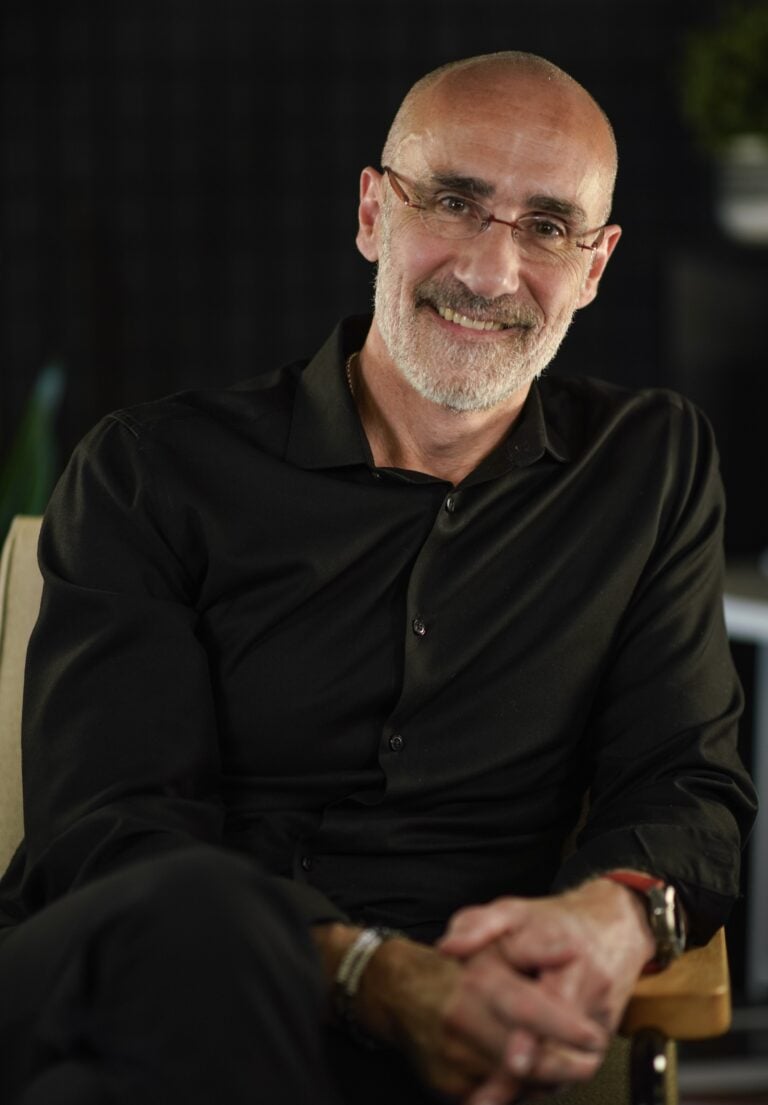
    #472: Happiness Habits, with Harvard Professor Arthur Brooks

    Imagine this: You’re a teenage musical prodigy, a world-class classical French horn player. You drop out of college at age 19 and spend your twenties touring the globe as a musician (including, once, tripping and falling off the stage at Carnegie Hall).

    At age 31, you retire from your musical career, get a Ph.D., and become a professor – first at Syracuse and then at Harvard, where you teach both at Harvard Business School and at the Harvard Kennedy School.

    You publish 13 books and write a column for The Atlantic, which gets noticed by Oprah Winfrey. Oprah then invites you to dinner, where she asks you to co-author a book together.

    This is the life of today’s guest, Harvard Professor Arthur Brooks, whose collaboration with Oprah, a book called Build the Life You Want, focuses on the science and research behind happiness.

    Brooks teaches a class on leadership and happiness to second-year Harvard MBA candidates. In our conversation, we discuss a range of topics, including metacognition (thinking about how to think), the neurobiological basis of ruminating, and how to balance the concept of contentment with the innately human urge for ambition and progress.

    He also offers a formula for happiness: enjoyment + satisfaction + meaning and purpose.

    So – I hope you enjoy this episode; I hope you find it satisfying, and I hope it fills you with meaning and purpose!

    – Paula

  • |

    #464: The Science of Friendship (and How It Improves Your Net Worth), with Dr. Marisa Franco

    More than ever, most people’s lives are packed to the brim with activity. We are trying to fit in demanding jobs and families, commuting and a neverending list of chores. Social lives often suffer.

    It’s no wonder that in 2021, 12% of U.S. adults said they did not have any close friends, up from 3% in 1990.

    This has enormous consequences on our health, productivity, and our ability to grow our net worth, make money, and enjoy life.

    Dr. Mariso Franco, a renowned psychologist and best selling author, shares invaluable insights on the significance of fostering meaningful connections and discusses the detrimental impact of NOT having fulfilling connections in our lives.

    Today’s episode also delves into the importance of connection in the workplace. We chat about how cultivating genuine relationships with colleagues can boost productivity, enhance job satisfaction, and contribute to a positive work environment.

    Throughout the episode, Dr. Marisa Franco shares practical tips and actionable advice on how to nurture and sustain friendships in our fast-paced, digital age and improve our overall well- being.