A Backstage Peek at the Laptop Lifestyle – Tales from a Frequent Traveler
Last month, I tracked my time in 15-minute increments for a week and published the humiliating results.
Afterwards, I opened this email from a reader:
“You gave me a realistic view of what life might be like when I become an entrepreneur -– I could potentially face some of the same challenges that I do now working in corporate America, even though I thought they’d disappear:
1) Wake up to an alarm (and hit the snooze button)
2) Get distracted and have time disappear into the “vortex”
3) Working 40+ hours per week
She asked me to describe a typical day of a lifestyle entrepreneur.
Here’s the problem: there’s no typical day.
Click here to Grab a free pdf of this post
When I’m at home, I make huge strides on my blog, podcast and Your First Rental Property. I practice simple habits that create big results.
When I’m traveling, though, everything falls into disarray.
Sigh.
And I travel an insane amount. I’ve made 15 international trips from 2014-16 alone. Last year I accidentally got American Airlines “Gold” frequent flyer status without trying. I’m not saying this to brag, but to share a realistic picture of the laptop lifestyle.
I’ve traded a morning commute for airport delays.
This year, I’m making 14 trips – five overseas and seven domestic — in 12 months. Here’s my travel itinerary in 2016:
January: —
February: Los Cabos, Mexico
March: Bordeaux, France
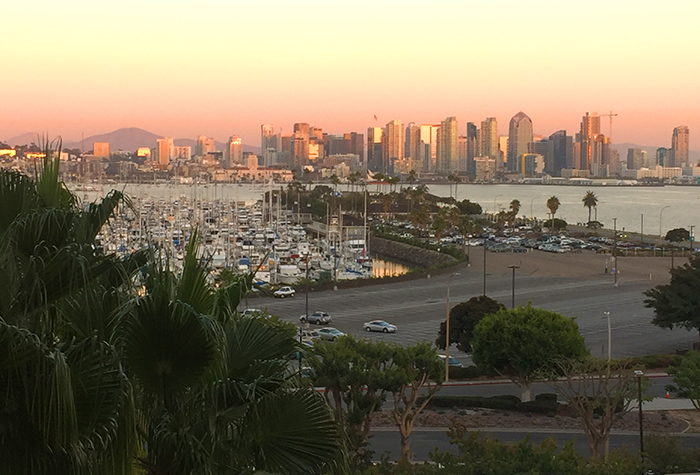
April: San Diego
May: Seattle
June: Cincinnati
July: Denver
August: Ireland; Burning Man
September: Crested Butte, Colorado; San Diego (second trip this year)
October: Kathmandu, Nepal; San Diego (third trip this year)
November: Ecuador
December: New Mexico
Despite notions to the contrary, I don’t spend every trip sipping champagne from a Swarovski goblet while former Olympian weightlifters massage my feet. (That’s only every-other-trip.)
I’m working while I travel, just as I would back at home, but with less convenience. I’m jet-lagged; I’m in a different time zone; I don’t have my printer/scanner/podcast microphone; the Wi-Fi is slower, and often I’m not exercising or eating as well.
My attention is also occupied by the trip’s purpose (speaking, weddings, etc.), and this time must get sacrificed from elsewhere.
“Cut to the chase, Paula.”
So to illustrate a “day in the life,” I’ll need to show you two days:
- One day spent traveling
- One day spent in my home office
Today, I’ll walk you through an example of a day as a digital nomad, working from my laptop while on the road.
In a future article, I’ll show you how I maximize productivity from my home office, where I’m more grounded, focused and efficient.
Here we go:
The Laptop Lifestyle
Date: Monday, Sept. 12.
Location: Valley View Hot Springs, Colorado.
7 am – I lay awake, my mind churning through emails, conversations, and upcoming events. I draft several blog posts in my mind; I wonder if this weeks’ podcast has been edited yet; I mentally rehearse a speech I’m supposed to give at a conference in a few weeks.
I manage everything other than getting out of bed.
7:30 am – I get out of bed, which at this point is an official accomplishment. Where’s my smiley-face sticker?
I’m staying at a cabin in southern Colorado. It’s Day 4 of a four-day visit to this state, and after the wedding and family time, I’m feeling guilty about my three-day weekend. I find the cloud in every silver lining.
8:15 am – I’ve chugged water and coffee, consumed half an avocado, enjoyed a short walk, and written 400 words. Success.
8:30 am – I’m up to 450 words and my brain is flittering into ‘editing’ mode. It’s time to switch to another task before I start obsessing over sentence structure and lose half a day.
I open Powerpoint to work on a speech I need to deliver in a few weeks. I’m reminded that Powerpoint sucks. #Truth
10:30 am – Wahoo! Massive progress on the speech. I close the laptop and start packing my luggage.
11 am – Done packing! I take a short hike, soak in hot springs and dry off in a sauna. Not bad for 11 am on a Monday.
12 noon – Lunch: Raw broccoli and red bell pepper dipped in hummus. A bowl of black beans topped with jalapeños, sea salt, and the other half of my breakfast avocado. A bottle of Perrier. I’ve lost 15 pounds since April, and 99% of these results came from changing my eating habits.
12:18 pm – Done with lunch, which took exactly 18 minutes to prepare and eat. Cleanup is simple: wash one pan, one spatula, two bowls and two spoons.
12:22 pm – Done with cleanup. 4 minutes. Wheee!
I head into a hot spring for a final soak. Another guest is playing a hand pan, a percussive instrument made from a composite alloy. I’ve never heard this sound before, and it’s breathtaking.
12:50 pm – Towel off; walk towards the rental car.
1:05 pm – We jump in the car and start the journey to Colorado Springs. I intend to work during the drive, but the scenery looks like this:
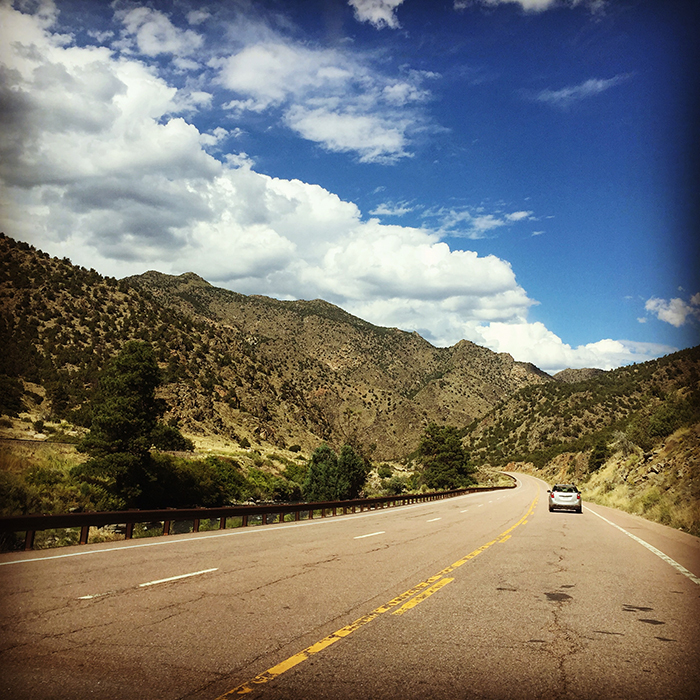
So I close my laptop and stay present in the moment.
2:35 pm – The scenery’s less interesting now. I open the laptop and work on my upcoming presentation, snacking on cherry tomatoes and cashews while winding mountain roads give way to grassy plains.
4:07 pm – We reach Colorado Springs, where we refuel the rental car, grab snacks for the flight, then drive to the airport to start the familiar routine.
4:52 pm – We check a bag with Allegiant Airlines, then zoom through TSA pre-check.
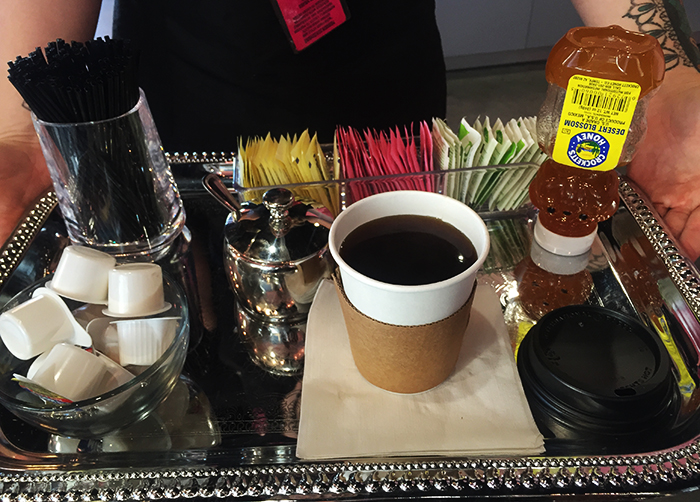
5:07 pm – We find cushy seats at the frequent flyer airport lounge. I sip mint tea and nibble on sesame sticks while editing lessons for Your First Rental Property, my real estate investing course.
The TV in the airport lounge is blasting nonsense about the JonBenet Ramsey murder. Why are we still talking about this? I grab the remote and turn off the distraction. I brace myself for an outcry from my fellow lounge guests. Nobody objects.
Why do we accept small irritations in life, when the solution is so damn simple?
6:02 pm – We head to the gate.
6:05 pm – The flight isn’t boarding yet due to lightning, so I open PowerPoint and finish prepping for my speech.
6:38 pm – I’m seated on the plane. The tray table is supposed to stay up, so I write business ideas on my phone through Evernote.
Once we’re in-air, I open my laptop to work on the rental property course.
7:32 pm (local time, one hour behind) – We land at the Vegas airport. My fellow passengers cheer; they’re ready to lose money at slot machines. I’m the local lame-o who only wants a shower.
8:35 pm – The Uber driver brings me home sweet home! I unpack, clean, feed the pets, water the plants, reheat leftovers and resettle. I check email for about 30 minutes somewhere in there.
10:48 pm — Goodnight!
How does this total?
- Work: 7.65 hours (459 minutes), spread in chunks throughout the day
- Time Spent Hitting Snooze: 30 minutes
That’s a normal workday in an abnormal environment. #BeWeird
Let’s look at a few awesome-to-sucky ratios from the day:
- Time Gawking at Gorgeous Mountains: 80 minutes
- Time Cursing the Crappiness of Powerpoint: Constant
Here’s another one:
- Time Spent in Hot Springs/Hiking: 1 hour, 30 minutes
- Time Spent in Transit: 8 hours, 45 minutes (includes work overlap)
There’s a lot of suckiness to get to the awesome. The metaphor is obvious: if you want to play hard, you’ve gotta work harder.
Mastery, Not Margaritas
Yesterday I had lunch with two friends, a local attorney and a retail store owner.
During our meal, I started describing new productivity tactics I’m testing. One of my lunch companions looked amused.
“You write about financial independence, don’t you? Not having to work?”
Ah, the old “have-to-work” vs. “get-to-work” question. I hear this often enough that I’d like to close out with a few thoughts on the topic.
I built financial independence by investing in rental properties, then scaling these such that the net cash flow can cover my current lifestyle. As a result, I don’t need to upload my resume on Monster.com to buy groceries.
But paradoxically, those who are ambitious enough to create financial independence are often the least likely to spend decades in Cancun, drowning their youth in high-fructose margaritas.
Happiness doesn’t arise from the absence of responsibility. It emerges from spending time on activities that create a state of consciousness called flow, also known as “being in the zone.”
When you love your work so much that time and space melts away, when the world shrinks to a pinpoint that’s nothing more than yourself and your creation, you’ve surpassed “having a job.” You have a calling.
Financial independence isn’t a precursor to snacking on Cheetos while watching Cheers re-runs. Rather, it’s a vehicle that teleports you away from small-scale concerns — paying the electric bill — so you can focus on audacious, long-term goals.
I work harder than ever now that I don’t need the money.
What motives me to wake up at 7 am on the last day of a vacation at a hot spring resort? I didn’t need to deliver that speech. I don’t need to release another podcast episode. And I don’t need to write this blog post. Why am I clacking at a keyboard, instead of hiking or hot tubbing?
I’m not thinking about paying for utilities. I’m focused on impacting the two million people who’ve visited this website since its inception — and the millions more who will follow.
Money isn’t the end game. It’s a tool that lets you live a bolder purpose.