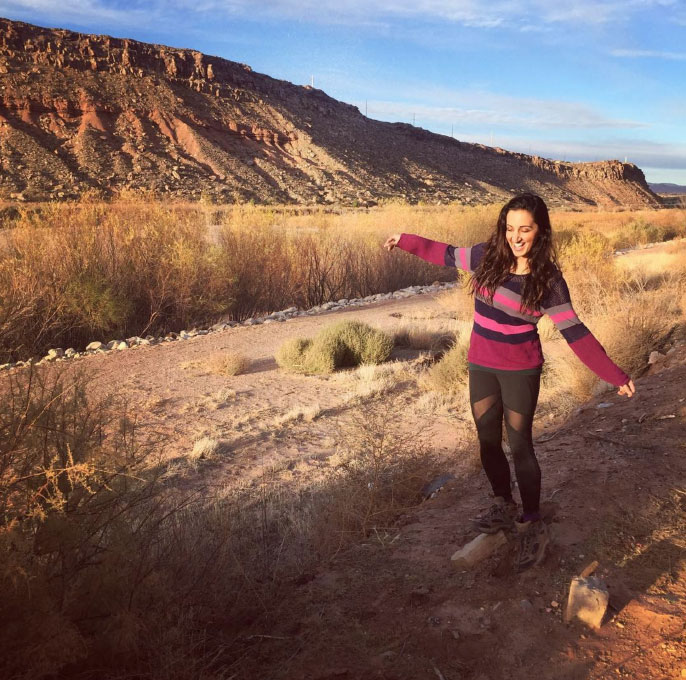
A flaneur is a French term for someone who strolls in search of excitement. I'm applying that to this trip to Austin, Texas - much to people's surprise.

What the French Taught Me About Texas


A flaneur is a French term for someone who strolls in search of excitement. I'm applying that to this trip to Austin, Texas - much to people's surprise.

Flaneur - What the French Taught Me About Texas TravelI’ve been in Austin, Texas for a week; I have another week to go. Several people here, upon discovering that I’m a visitor, have asked me the same question:

“So what do you want to do while you’re here?”

I shrug. I’m up for anything. Most days I pick a neighborhood, stroll around, poke into coffee shops and cafes, and strike up conversations with random people.

Apparently this is rare. Many people think they need to travel with an hour-by-hour itinerary of events. They’ve got plans, maps and agendas that guide them from breakfast ‘til dessert.

If you only have 10 vacation days per year, this strategy makes sense. Losing one day through inefficiency – sleeping late, missing the train – equates to losing 10 percent of your annual time off from work. You feel pressured to fill that unscheduled gap between 10 a.m. and 2 p.m. The clock is ticking.

Unfortunately, this harried pace prevents the spontaneity that creates the most amusing chance encounters. I’m referring to the take-a-side-street, say-yes-to-invites, make-new-friends-in-strange-places spontaneity.

There’s a French word that expresses this idea: “flaneur.” This refers to someone who strolls around, without hurry and without haste, drinking the sights and sounds, ready to experience anything.

American actress and author Cornelia Otis Skinner describes a flaneur as “the deliberately aimless pedestrian, unencumbered by any obligation or sense of urgency, who, being French and therefore frugal, wastes nothing, including his time, which he spends with the leisurely discrimination of a gourmet, savoring the multiple flavors of his city.”

What a beautiful way to live. Frugal with time, yet unhurried.

The French have described the way I want to spend my time in the beautiful state of Texas.

Even if you only have 10 vacation days per year, dare yourself to try it. Resist the urge to jam-pack your days as if you were at a business conference. Stroll aimlessly. Talk to strangers.

Better yet, try it today, in your hometown. Take a side-street. Stroll into an art gallery. Meet someone new. You never know what’s around the corner, even those corners in your own backyard.

P.S. I have heard that some parts of French-speaking Canada use the word “flaneur” to refer to loiterers. That’s NOT the kind of aimless strolling I support.

P.P.S. Please don’t turn the comments section into a Texas vs. France debate. This ain’t the place.
You Might Also Like

  • |

    #594: How to Travel on $75 Per Day, with Nomadic Matt Kepnes

    Ever wonder if you could afford to travel for months at a time? According to Nomadic Matt, who’s visited more than 100 countries over the last 19 years, you can see the world on just $75 a day. That’s about $27,375 per year, less than many people’s current cost of living.

    Matt Kepnes, better known as Nomadic Matt, joins us to challenge common assumptions about travel costs. He explains that long-term travel can actually be cheaper than staying home. 

    When you’re traveling, you shed many regular expenses that eat into your budget back home, like car payments, home insurance, and utility bills.

    The key is to “travel like you live,” as Nomadic Matt puts it. This means using public transportation instead of taxis, shopping at local markets, and seeking out free activities — just like you might do in your hometown.

    It’s not about staying at five-star resorts, but experiencing destinations authentically while keeping costs reasonable.

    Nomadic Matt also breaks down several travel myths. The old advice about booking flights on Tuesdays? Outdated in today’s algorithmic pricing world. Using incognito mode to get better flight prices? No evidence supports this idea. 

    He does confirm that booking round-trip flights often costs less than one-way tickets, even if you don’t use the return portion.

    For those interested in credit card points, Nomadic Matt recommends choosing cards based on your specific travel goals rather than chasing the most popular options. Consider which airlines you use most and what perks you’ll actually take advantage of.

    The pandemic has transformed travel in significant ways. While prices have increased and some budget travel services have disappeared, new opportunities have emerged — especially for remote workers who can now take advantage of digital nomad visas to live abroad while maintaining their income.

    Whether you’re planning a two-week vacation or dreaming of becoming location-independent, Nomadic Matt’s practical advice shows how international travel is more accessible than you might have thought.

  • | | |

    #504: The Points Guy: Growing a Side Hustle into a 140-Person Business

    Brian Kelly faced a harsh reality during the Great Recession – $65,000 in income and crushing credit card debt.

    He started a simple side hustle, a website called The Points Guy, as an attempt to earn a few hundred dollars a month.

    Fast forward to today: The Points Guy boasts 11 million monthly visitors and a thriving team of 140 employees.

    In this episode, Brian pulls back the curtain on his incredible journey, transforming a fledgling side hustle into a multimillion-dollar enterprise.

    He also shares his signature expertise – the art of redeeming airline miles and points – empowering you to travel smarter. 

  • | | | |

    #501: Live From Brooklyn: Travel More, Work Less

    Feeling stuck in a job you hate, dreaming of exotic adventures? This episode is your escape hatch.

    Brad Barrett, host of the ChooseFI Podcast, takes the interviewer role in this special episode, recorded LIVE at a comedy club in Brooklyn.

    Brad interviews me (!!) about how I quit my reporter gig and traveled the world for over 2 YEARS! This episode spills the tea on my transformation from newspaper reporter to world wanderer, and talks about how this podcast (now over 500 episodes!) got started. Feeling inspired? This episode is your travel hack manual for designing your dream life on a budget.

    Enjoy!

  • |

    #352: Ask Paula: Should I Pull Money from My Emergency Fund to Invest or Pay Off Debt?

    [smart_track_player url="https://traffic.libsyn.com/secure/paulaandjaymoney/AA346.mp3" title="Ask Paula: How Can We Reach Financial Independence by 35? " artist="Paula Pant" social="true" social_twitter="true" social_facebook="true" social_gplus="true" social_linkedin="true" social_stumble="true" social_pinterest="true" social_email="true" ]

    Anna and her husband have volatile income, but Anna thinks that having 18 months of living expenses is unnecessary. She’s torn between paying off her student loans ($30,000) or investing the money. Mentally, she always figured she would pay off her debt first, but wouldn’t investing pay off in the long run?

    Charlotte and her husband are taking a phased approach to financial independence, where they need to bridge two gaps before they each turn 59 ½. How can they calculate how much they need at each phase?

    Elle has a retirement plan in place, but her company is adding a Roth 403(b) option soon. Should she stay the course or adjust her strategy in these last five years before retiring?

    Sara wants to purchase land and build her dream house by refinancing her rental property and turning her current home into a second rental. How can she improve this plan?

    Joe Saul-Sehy, my friend and former financial planner, joins me to tackle these questions on today’s episode. Enjoy!

  • The Importance of Using the Toilet Correctly (and Other Things I Learned Last Month)

    When I was 18, I got a full scholarship for a one-month study abroad trip to Japan.

    At the time, I didn’t have much interest in international travel. But free is free, so I spent a month in Japan during the summer between my freshman and sophomore year of college.

    That trip changed everything.

    That trip ignited the travel bug.

    I came back so enthusiastic about exploring the globe that I’ve based every major decision in my adult life around the goal of traveling more.

    Every major life choice, from my initial career in journalism, to my decision to quit my newspaper job to backpack around Southeast Asia, to my pivot to becoming a location independent, self-employed freelancer …

    Every choice I’ve made has been based around whether or not this opportunity would allow me to travel. It’s the benchmark against which all my decisions are made. It set me on a meandering path that led to financial independence.

    And it all started with that trip to Japan.

  • |

    #202: Slow Travel is Cheap Travel – with Nomadic Matt

    [smart_track_player url="https://traffic.libsyn.com/paulaandjaymoney/AA202.mp3" title="Slow Travel is Cheap Travel - with Nomadic Matt" artist="Paula Pant" social="true" social_twitter="true" social_facebook="true" social_gplus="true" social_linkedin="true" social_stumble="true" social_pinterest="true" social_email="true" ]

    In 2006, Matt Kepnes worked at a hospital in Boston, and he felt miserable. He dreaded fighting traffic, spending his days under his offices’ fluorescent lighting, drinking stale coffee.

    He decided to take one year off — a “gap year” — thinking that after his sabbatical, he’d resume another 40 years of punching the clock.

    He worked 60-hour weeks in order to save money for his sabbatical year. He saved $30,000, then handed his boss a resignation letter.

    Matt traveled for 18 months, returned to Boston, and realized he had lost his willingness to punch the clock. He couldn’t sit still in an office any longer.He re-packed his bags, bought a one-way flight to who-knows-where, and reinvented himself as a travel writer known as Nomadic Matt. He lives on a budget of $18,250 per year, or $50 per day.

    In the last decade, his travel information website, NomadicMatt.com, has become one of the most popular travel blogs in the world, drawing millions of visitors. His writing has been featured in The New York Times, CNN, National Geographic Travel, and the BBC. He’s a New York Times bestselling author, and he’s traveled to more than 100 countries.

    In today’s episode, Matt and I discuss the art of slow travel.