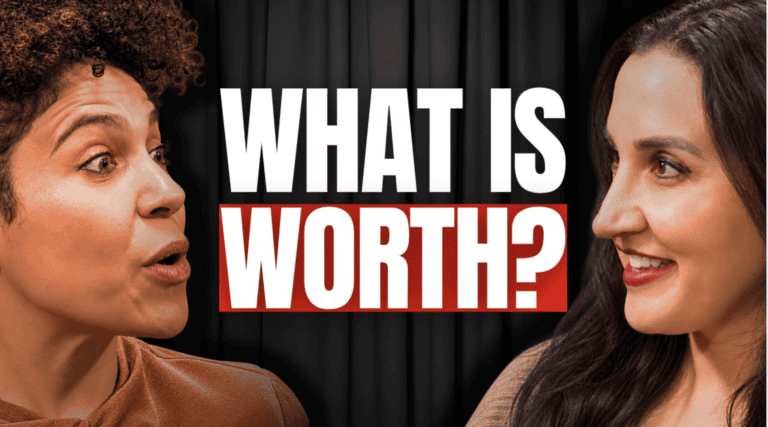

#680: Q&A: I Want to Retire Early Without Selling My Stocks in a Crash
 In this Q&A episode, we tackle three questions that sit right at the intersection of money, time freedom, and life design. We start with a listener who’s planning a self‑funded sabbatical and needs to decide how much risk to take with savings earmarked for a very specific timeline.
From there, the conversation widens into a bigger, philosophical question about pensions versus 401(k)s, and what we lose (and gain) as careers become more fluid and less tied to a single employer.
We close with an advanced early‑retirement question on taxes and liquidity, exploring when it might make sense to borrow against investments instead of selling them. Along the way, we keep returning to a central theme: when one part of your life involves more uncertainty, it often makes sense for the financial side to be simpler, safer, and easier to live with.
Listener Questions in This Episode
Jean asks: How should I save for a one‑year, self‑funded sabbatical that starts in about three years. Should I keep the money in a high‑yield savings account, invest part of it, or split the difference? (1:48)
Jared asks: Are pensions actually better than 401(k)s, given their predictability and behavioral simplicity? Or do vesting rules, reduced mobility, and linear growth make them less attractive in today’s job market? (25:15)
Mia asks: As early retirees drawing from taxable accounts, does it make sense to use a securities‑backed line of credit to manage taxes and liquidity without selling investments at the wrong time? (41:07)
Key Takeaways
- Medium-term goals (around 3–5 years) are the hardest to invest for, and safety often matters more than squeezing out returns.
- When you take big risks in one area of life (career breaks, early retirement), it often makes sense to de-risk your investments.
- High-yield savings accounts can outperform more complex options once volatility, stress, and timing risk are considered.
- Pensions trade flexibility and mobility for predictability, and that tradeoff matters more in a modern, fluid job market.
- Advanced tax strategies like borrowing against securities can work, but only with strict guardrails and professional management.
- Financial decisions aren’t just about math, they’re deeply shaped by psychology, fear, and life circumstances.
Resources
affordanything.com/community
affordanything.com/newsletter
affordanything.com/financial-goals
affordanything.com/your-next-raise
quince.com/paula
Chapters
Note: Timestamps are approximate and may vary across listening platforms due to dynamically inserted ads.
(0:00) Introduction
(3:30) Why short- and long-term investing rules don’t work for medium-term goals
(7:00) The danger of market crashes when you need the money soon
(11:30) High-yield savings vs ETFs for near-term financial freedom
(16:00) Joe’s case for prioritizing certainty over potential upside
(21:00) Paula’s counterpoint: limited risk with bonds and Ginnie Maes
(27:00) How bad bond losses can really get (and why that matters)
(33:00) Is the upside worth it? Running the real dollar math
(39:30) Flexibility, timing, and delaying plans if markets turn
(46:00) Final takeaway: balancing life risk with portfolio risk

Thanks to our sponsors!
Policy Genius
Secure your family’s future with Policygenius. Head to policygenius.com to compare life insurance quotes from top companies and see how much you could save.
Mint Mobile
Quit overspending on wireless with 50% off Unlimited premium wireless. Plans start at $15/month at mintmobile.com/paula
Indeed
Don’t leave hiring to chance, hire better and work better with Indeed. Visit indeed.com/credit