Flights into Vegas are fascinating.
Most of my fellow passengers are exuberant about their upcoming weekend of debauchery. They order beers after takeoff, slosh their way across the airspace and holler crazy-isms like, “if I win big, I’m upgrading to first class coming back!”
(Don’t they know it “stays in Vegas”?)
On a recent flight, I found myself seated amidst a rowdy group of grownups. One of them whipped out a selfie stick and snapped at least a dozen pictures from her seat in Row 26.
I imagined the Facebook photo captions:
- “This is us with our seat backs upright!”
- “This is us with our tray tables stowed!”
- “And this is us with our seatbelts securely fastened!”
Click here to Grab a free pdf of this post
This got me thinking:
There’s a curious cultural phenomenon of documenting every moment of our lives. We photograph every happy hour, haircut, outfit, bruise, cute cat pose and funny license plate.
But how often do we look at those photos?
Almost never.
We’re so bad at reviewing old photos that app developers built Timehop to remind us to glance at our memories. Heck — we’re so bad at reviewing photos that the most popular social media app, Snapchat, is based on the premise that we’ll never view these images again.
But why? Why do we ignore these photos?
Maybe this reflects a simple truth: The more items we own, the less we value them.
Digital photos are abundant, so we rarely look at them. But the solitary black-and-white snapshot of your grandmother in 1940 is framed and displayed.
We look at overstuffed closets and conclude we have “nothing to wear.” But we can travel for a month with a lightweight carry-on.
The more fishing rods and fancy moisturizers we collect, the more likely we’ll shove everything into a closet, to be ignored for the rest of human history.
And yet —
Paradoxically, the more we own, the more we want.
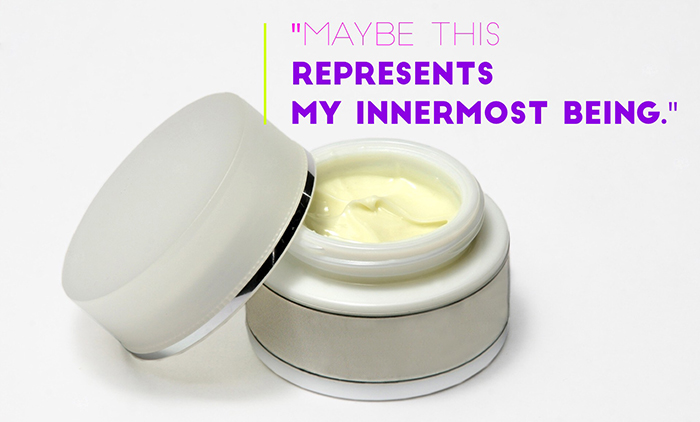
We’re dissatisfied with this mountain of stuff. “This moisturizer just isn’t me.” And like a junkie needing his next hit, we wonder if maybe the NEXT THING might satisfy.
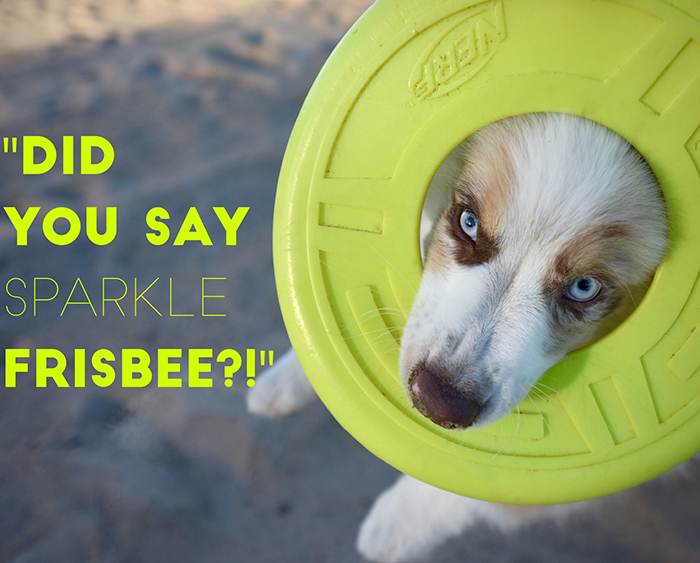
“Maybe this is the Frisbee I’ve been looking for all my life!”
Our closets and drawers burst with items we need to organize, clean, maintain, polish, tune, upgrade, store and retrieve. It’s exhausting.
Our stuff owns us.
But there’s a simple corollary that fixes everything: The less we own, the more we enjoy the few items we have.
Our five favorite shirts. Our tiny, beautiful assortment of plates and bowls. Our mostly-empty pantry that holds only the foods we’re excited to eat.
Owning less isn’t deprivation. It’s curation. The less we own, the more space in our lives for things that matter.
If we want to boost happiness, we must curate our belongings (and lives) with the same swift ruthlessness that a museum director uses to curate his exhibit.
Because here’s the reality: We have space for anything, but not everything.
We can fill our lives with whatever we want, until we run out of space. Or money. Or time. That’s why we need to edit the clutter from our homes just as a writer edits words.
Editing makes us calmer. Happier. And here’s an unintended bonus benefit: when we curate, we also spend less without feeling deprived.
We’re not trying to save money. We’re not being frugal for its own sake. We’re asking the deeper question: “Do I want to let this into my life?” Most of the time, that answer is no. And this creates space for the rare things worthy of yes.
Curation isn’t “acting cheap.” Far from it. As longtime readers know, I don’t shop sales. My purchasing philosophy is to own fewer but better. I’ll buy a top-quality $100 pair of yoga pants without blinking, but I’ll wear those pants twice a week for the next four years.
Curation isn’t intended to save money; that’s just a byproduct. That’s why this practice includes minimizing free and cheap stuff.
Why choke your garage with scrap lumber and half-empty paint buckets from the Craigslist free section? It’s free, but that’s irrelevant. Do you want to hoard 44 paper towel rolls and a broken leather recliner? Or would you rather enjoy a calmer, simpler life?
Unfortunately, most people don’t curate free stuff. (Ahem, photos.)
Curation is a practice, like yoga, guitar or basketball. You make marginal gains and improve with time. Sure, you foul. You miss some shots. But you keep shooting. You’ll never play a perfect game – no athlete does — but you’ll get a heckuva lot better. You might even turn pro.
Curation is a mindset. It’s critically thinking about every element in your life: objects, friendships, time.
Let’s spend a moment on that last point: curating your time.
Time feels abundant when we’re young, so we squander it with drama and gossip and getting tangled by insecurities. Then we wise up. We own less time now, so we value it more. That’s when we start focusing on regaining control over our time – which is the natural consequence of controlling our money.
We know this is our only shot at life. We don’t want third-party forces to dictate our time, and there’s only one way to defend against this: grow the gap between earning and spending. Invest that gap. Repeat.
Eventually, we create more time and money than we need. We’re in control. That’s better than any collection of shoes, shirts and sparkle Frisbees.
Let’s reduce this article to its core:
Curate everything.
And avoid taking airplane selfies from Row 26. Well, unless it’s for Snapchat. Then it’s alright.
P.S. If you’re interested in reading more, The Life-Changing Magic of Tidying Up is an amazing, imminently useful book about curating your home.
Watch on YouTube!

LEARN HOW TO ESCAPE THE 9-5
Get your FREE Escape Book and Join Our Free Online Community.