Investing

Are you afraid to invest your money? Aren’t sure where to invest, or what to invest in? We break down the principles of investing and the order in which you should invest in these articles and podcasts.

  • | |

    #361: The GameStop Revolution, One Year Later – with Spencer Jakab

    [smart_track_player url="https://traffic.libsyn.com/secure/paulaandjaymoney/AA361.mp3" title="The GameStop Revolution, One Year Later — with Spencer Jakab " artist="Paula Pant" social="true" social_twitter="true" social_facebook="true" social_gplus="true" social_linkedin="true" social_stumble="true" social_pinterest="true" social_email="true" ]

    Wall Street Journal columnist Spencer Jakab marks the one-year anniversary of that weird time when the subReddit Wall St Bets pumped shares of meme stocks like GameStop and AMC Theaters, triggering a short squeeze that forced several hedge funds to lose billions. 

    What did we learn from that experience? And how do we actually take down Wall Street?  How do we launch a truly effective financial revolution?

     We share those insights in today’s episode. 

    Enjoy!

  • | | | |

    #357: Practical Investing and the Efficient Frontier, with Joe Saul-Sehy

    [smart_track_player url="https://traffic.libsyn.com/secure/paulaandjaymoney/AA357.mp3" title="Practical Investing and the Efficient Frontier, with Joe Saul-Sehy" artist="Paula Pant" social="true" social_twitter="true" social_facebook="true" social_gplus="true" social_linkedin="true" social_stumble="true" social_pinterest="true" social_email="true" ]

     Discussing advanced investing topics with me is former financial planner Joe Saul-Sehy.

    You may recognize him from the Ask Paula episodes, but we discuss financial topics shared in his new book “STACKED: Your Super-Serious Guide to Modern Money Management” – co-authored with Emily Guy Birken.

    Enjoy!

  • |

    #338: Why Investors Need a Latticework of Ideas, with Morgan Housel

    [smart_track_player url="https://traffic.libsyn.com/secure/paulaandjaymoney/AA338.mp3" title="Why Investors Need a Latticework of Ideas, with Morgan Housel" artist="Paula Pant" social="true" social_twitter="true" social_facebook="true" social_gplus="true" social_linkedin="true" social_stumble="true" social_pinterest="true" social_email="true" ]

    Here are three lessons from this conversation with investment writer Morgan Housel:

    Lesson #1: Great investors need patience and humility.

    Lesson #2: Read broadly.

    Don’t just read books about finance and investing. Read from a broad multi-disciplinary array of subjects, so that you can form a latticework of ideas.

    Lesson #3: Play a strong defense.

    On the surface, it seems like playing defense is a conservative strategy. Emergency funds and a strong income-producing allocation, for example, both sound conservative.

    But in the long-term it could prove to be the opposite.

    Enjoy this interview, which originally aired in April 2018.

  • |

    #333: The End of Recessions?, with Ben Carlson

    [smart_track_player url="https://traffic.libsyn.com/secure/paulaandjaymoney/AA333.mp3" title="The End of Recessions?, with Ben Carlson" artist="Paula Pant" social="true" social_twitter="true" social_facebook="true" social_gplus="true" social_linkedin="true" social_stumble="true" social_pinterest="true" social_email="true" ]

    In the 1890s and early 1900’s, we had recessions every two years.

    From 2009 to 2020, we enjoyed an 11-year bull run, the longest bull run in history. And when we finally had a recession, it lasted only two months. It was the shortest recession in U.S. history.

    The duration between recessions is growing longer (these days, we average 10 years between recessions, as opposed to two years at the turn of the previous century).

    And when recessions strike, we recover faster. The average length of recessions is growing shorter.

    What does this mean? If we project these trends into the future, are we bound for the end of recessions?

    That’s the question that kicks off this discussion with Ben Carlson, Director of Institutional Asset Management at Ritzhold Wealth Management and the host of the Animal Spirits podcast.

  • |

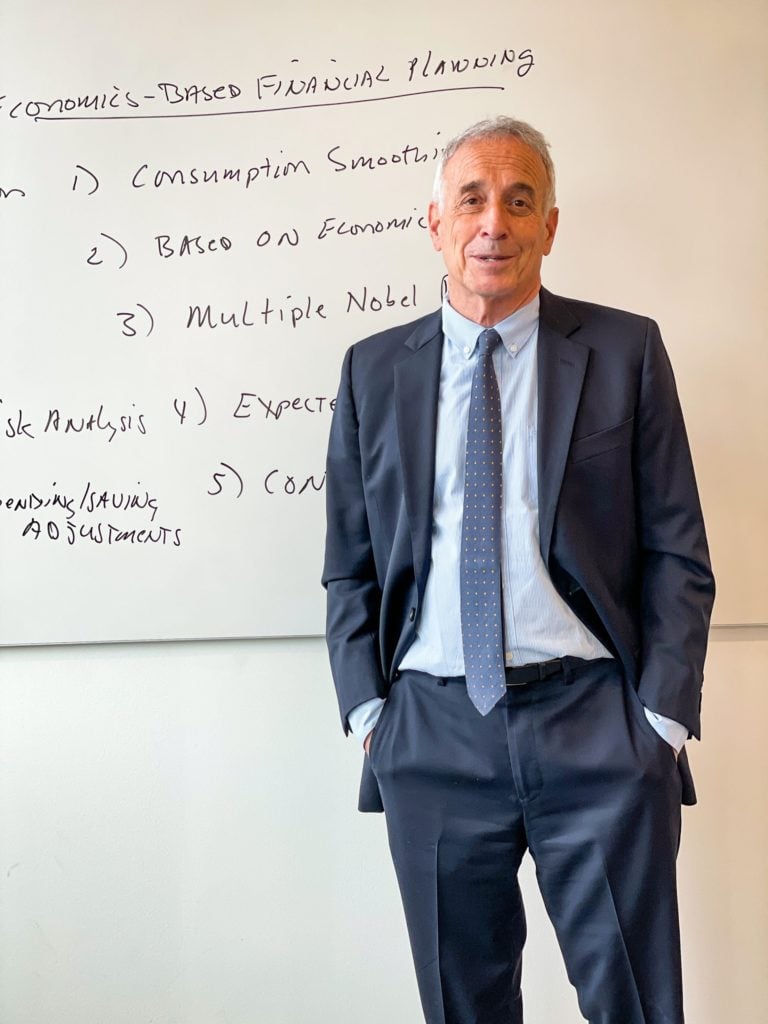
    #329: Challenging Your Confirmation Bias, with Economist Larry Kotlikoff

    [smart_track_player url="https://traffic.libsyn.com/secure/paulaandjaymoney/AA329.mp3" title="Challenging Your Confirmation Bias, with Economist Larry Kotlikoff" artist="Paula Pant" social="true" social_twitter="true" social_facebook="true" social_gplus="true" social_linkedin="true" social_stumble="true" social_pinterest="true" social_email="true" ]

    Have you ever thought about how an economist views financial planning?

    Would you guess that it’s vastly different from how some financial planners approach this work?

    Today’s guest, Laurence Kotlikoff, is a Professor of Economics at Boston University. The Economist named him one of the world’s 25 most influential economists in 2014. And he’s here to tell us this:

    “What we, as economists, are saying with respect to personal financial matters — in terms of our advice — is almost a complete right-angle as to what conventional advice is providing on every topic. How to invest, how to think about investment risk, how to do basic planning for retirement, everything – every single thing – is quite different.”

    Professor Kotlikoff has written 19 books and hundreds of professional articles and Op-Eds. He is a New York Times best-selling author, and his columns have appeared in The New York Times, The Wall Street Journal, The Financial Times, The Boston Globe, Bloomberg, Forbes, and other major publications. 

  • |

    #325: Bitcoin for Beginners

    [smart_track_player url="https://traffic.libsyn.com/secure/paulaandjaymoney/AA325c.mp3" title="Bitcoin for Beginners" artist="Paula Pant" social="true" social_twitter="true" social_facebook="true" social_gplus="true" social_linkedin="true" social_stumble="true" social_pinterest="true" social_email="true" ]

    Okay, so everyone and their dog is talking about Bitcoin — but what exactly is it? And what’s Ethereum?

    There’s a famous adage that you should never invest in something that you don’t understand.

    Today’s episode is intended to help you understand WTF is going on. Here’s what we cover:

    • We explain the history and purpose of blockchain, which is the technology underlying cryptocurrencies such as Bitcoin
    • We introduce Bitcoin, which is a use case of blockchain and currently the most popular digital currency. We explain how Bitcoin is created, what “mining” means, what “halving” means, and why some people believe that Bitcoin will continue to  increase in value
    • We discuss Ethereum, which is about use case of blockchain, and is a software platform on which developers build decentralized apps
    • We discuss the environmental impact of Bitcoin, including a discussion about the difference between proof-of-work vs proof-of-stake protocols

    If you’re feeling lost in the topic and confused by the jargon, start with this episode in which we cover the basics about blockchain technology and cryptocurrencies.

  • |

    #307: The Tax Risks That Could Blow Up Your Retirement Plan, with Ed Slott

    [smart_track_player url="https://traffic.libsyn.com/secure/paulaandjaymoney/AA307.mp3" title="The Tax Risks That Could Blow Up Your Retirement Plan, with Ed Slott" artist="Paula Pant" social="true" social_twitter="true" social_facebook="true" social_gplus="true" social_linkedin="true" social_stumble="true" social_pinterest="true" social_email="true" ]

    “Taxes are the single biggest factor that separates people from their retirement dreams.”

    That’s a quote from today’s guest, Ed Slott, a nationally recognized IRA distribution expert, CPA, and bestselling author.

    If you’re like most members of the Financial Independence Retire Early (FIRE) community, you understand the massive tax challenges inherent in retirement planning. Strategies such as the mega-backdoor Roth are popular because the FIRE community loves to optimize for taxes.

    Ed does, too.

    His book, The New Retirement Savings Time Bomb, is about how we can diversify and manage our tax risk so that we can achieve our financial independence and early retirement dreams.

    So … what should we do?

    Ed is a big proponent of Roth accounts because they’re an easy, widely-available solution. His Traditional IRA has a balance of $0.

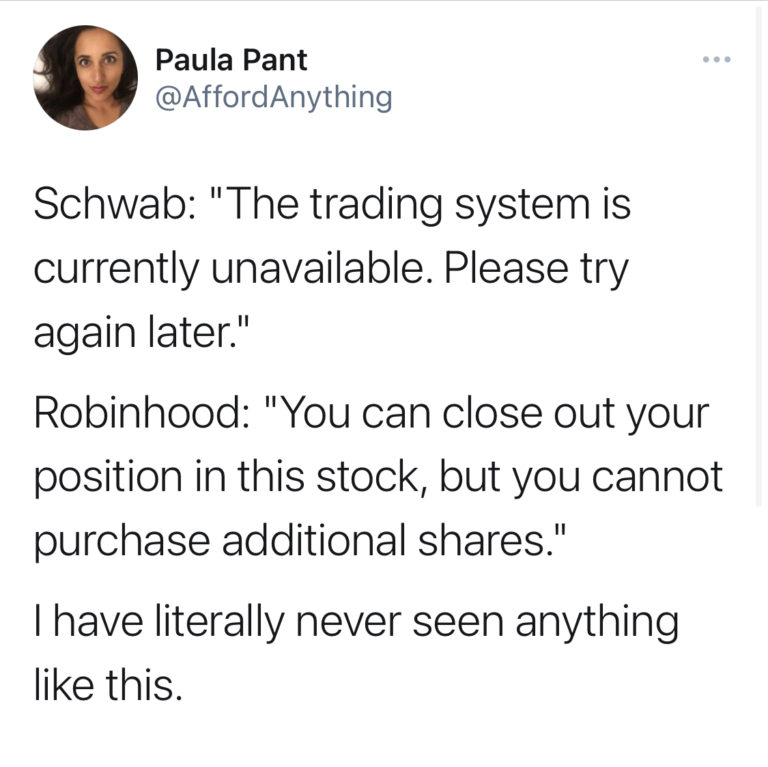
  • The FIRE Take on Wall St Bets, GameStop, and Meme Stonks

    The investor community is split into two factions: FIRE vs. YOLO. The YOLO crowd includes the people who read Reddit’s r/WallStreetBets, who chase speculative trades, who place margin trades on Robinhood. They share stock tips on Discord and bet on whatever appears in their chat feed. Earlier this week they piled investments into Galway Metals,…

  • | | |

    #296: Investing is the Art of Probabilistic Thinking

    [smart_track_player url="https://traffic.libsyn.com/secure/paulaandjaymoney/AA296.mp3" title="Investing is the Art of Probabilistic Thinking" artist="Paula Pant" social="true" social_twitter="true" social_facebook="true" social_gplus="true" social_linkedin="true" social_stumble="true" social_pinterest="true" social_email="true" ]

    There’s a lot happening in the market.

    The Dow is at a new high, there are runaway stocks causing irrational exuberance, and yet, unemployment claims are on the rise. How can this be?

    To make sense of this, we’re dedicating today’s show to discuss how improving judgment and using mental models can protect us against risks and short-term thinking. We also touch on the so-called death of cities, and what this means for real estate investors.

    This episode is for you if: you’re confused about why the stock market is doing so well while the world definitely isn’t, you’re getting caught up in market trends and wondering if you should make a risky investment, or you’re curious about whether cities will make a comeback after this is all said and done.

    Continue reading for a quick preview of everything discussed in this episode.

  • | |

    #271: Retirement Planning in 2020, with Dr. Wade Pfau

    [smart_track_player url="https://traffic.libsyn.com/secure/paulaandjaymoney/AA271.mp3" title="Retirement Planning in 2020, with Dr. Wade Pfau" artist="Paula Pant" social="true" social_twitter="true" social_facebook="true" social_gplus="true" social_linkedin="true" social_stumble="true" social_pinterest="true" social_email="true" ]

    Are you wondering how in the world you’re supposed to plan for retirement given the craziness of the year 2020?

    You’re not alone.

    That’s why we brought Dr. Wade Pfau on the show. Dr. Pfau is a Professor of Retirement Income for the American College of Financial Services. Dr. Pfau has made a major name for himself within the field of retirement planning. He’s a two-time winner of the Journal of Financial Planning Montgomery-Warschauer Award and two-time winner of the Academic Thought Leadership Award from the Retirement Income Industry Association.

    Dr. Pfau also won an award for best paper in the retirement category from the Academy of Financial Services. In 2014, he was named “40 Under 40” by InvestmentNews. He is a co-editor of the Journal of Personal Finance, and he speaks frequently at national conferences of organizations for financial professionals.

    He is a RetireMentor for MarketWatch, the Director of Retirement Research for McLean Asset Management, and an Expert Panelist for The Wall Street Journal. He holds a doctorate in economics from Princeton University, and he’s also a Chartered Financial Analyst.