

Author: Erin @ Team Afford Anything

  • |

    #331: Four Thousand Weeks, with Oliver Burkeman

    [smart_track_player url="https://traffic.libsyn.com/secure/paulaandjaymoney/AA331.mp3" title="Four Thousand Weeks, with Oliver Burkeman" artist="Paula Pant" social="true" social_twitter="true" social_facebook="true" social_gplus="true" social_linkedin="true" social_stumble="true" social_pinterest="true" social_email="true" ]

    Oliver Burkeman

    Four thousand weeks.

    That’s how long we live if we’re lucky enough to celebrate our 80th birthday.

    Crazy, isn’t it?

    We rarely think of our lifespan in terms of weeks. When we do, it seems painfully short. And that’s the point that Oliver Burkeman, author of Four Thousand Weeks, wants to drive home.

    Oliver, author of The Antidote: Happiness for People who Can’t Stand Positive Thinking and Help! How to Become Slightly Happier and Get a Bit More Done,  is a self-professed time management geek.

    But after reading scores of books, he concluded that most time management tactics result in an illusion of productivity. They don’t get to the root of why we feel the need to be time wizards. They don’t tell us how to overcome FOMO. They don’t mention the importance of relaxation or play.

    Instead, most advice furthers the false narrative that we can do it all and have it all. This narrative leads us to endlessly spin our wheels. Just one more task, just one more project…only to have five more take its place by the end of the week.

    If this sounds familiar (and exhausting), then Oliver has a different perspective to offer.
  • |

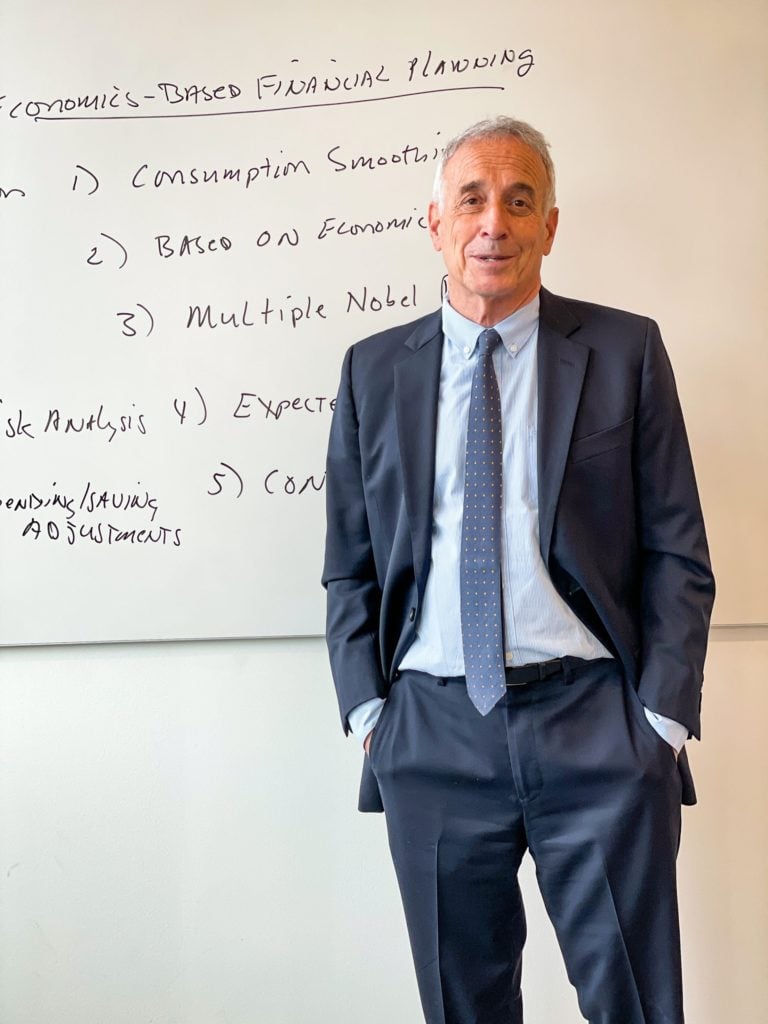
    #329: Challenging Your Confirmation Bias, with Economist Larry Kotlikoff

    [smart_track_player url="https://traffic.libsyn.com/secure/paulaandjaymoney/AA329.mp3" title="Challenging Your Confirmation Bias, with Economist Larry Kotlikoff" artist="Paula Pant" social="true" social_twitter="true" social_facebook="true" social_gplus="true" social_linkedin="true" social_stumble="true" social_pinterest="true" social_email="true" ]

    Have you ever thought about how an economist views financial planning?

    Would you guess that it’s vastly different from how some financial planners approach this work?

    Today’s guest, Laurence Kotlikoff, is a Professor of Economics at Boston University. The Economist named him one of the world’s 25 most influential economists in 2014. And he’s here to tell us this:

    “What we, as economists, are saying with respect to personal financial matters — in terms of our advice — is almost a complete right-angle as to what conventional advice is providing on every topic. How to invest, how to think about investment risk, how to do basic planning for retirement, everything – every single thing – is quite different.”

    Professor Kotlikoff has written 19 books and hundreds of professional articles and Op-Eds. He is a New York Times best-selling author, and his columns have appeared in The New York Times, The Wall Street Journal, The Financial Times, The Boston Globe, Bloomberg, Forbes, and other major publications. 

  • #327: Decoding Greatness, with Ron Friedman, Ph.D

    Hey Podcast family!

    Remember about two years ago, when I mentioned that Afford Anything would start hosting in-person live events?

    Then came a pandemic and ruined all our plans. ?

    Now we’ve turned a corner, and we’re excited about hosting a live workshop and retreat again. 

    We’re hosting a three-day event in New York City on August 20-22, dedicated to figuring out the next ten years.

    And here’s a page that explains evvvverything, including the agenda.

    Sign up and grab one of our discounted tickets by August 9.

    See you in New York!

    ___________________________________

    What do you typically attribute someone’s success to?

    Their talent?

    Their determination?

    The hours they’ve spent practicing? 

    These are the typical stories of success that we hear, but these stories are outdated. 

    Dr. Ron Friedman, award-winning social psychologist, dove deep into the research. He looked at how the best artists, athletes, and entrepreneurs get to the top of their game. 

    The credit doesn’t go to talent or work ethic. 

    Instead, the credit goes to the framework these top performers used to learn. 

    Dr. Friedman distills his research in his new book, Decoding Greatness, and explains how we can use this same framework to improve our skills and achieve greatness. 

  • |

    #323: What’s in Store for the Economy and the Future of Work?, with ChooseFI hosts Brad Barrett and Jonathan Mendonsa

    [smart_track_player url="https://traffic.libsyn.com/secure/paulaandjaymoney/AA323.mp3" title="What's in Store for the Economy and the Future of Work?, with ChooseFI hosts Brad Barrett and Jonathan Mendonsa" artist="Paula Pant" social="true" social_twitter="true" social_facebook="true" social_gplus="true" social_linkedin="true" social_stumble="true" social_pinterest="true" social_email="true" ]

    What did you learn from 2020? 

    That question carries a lot of weight, doesn’t it? 

    Collectively, all of us experienced an unprecedented year. In March 2020, the world changed overnight. 

    Working from home became the norm. The market shot up and down and up again. Bitcoin skyrocketed. Housing prices held at unfathomable highs. We saw a global reckoning around social justice. 

    Needless to say, our internal and external worlds experienced rapid shifts. We may still feel ungrounded.

    And now we’re dealing with the aftermath, asking questions such as, “What do I really want out of life? How can I form a plan when there’s still so much uncertainty?”

    The answer: become nimble. Embrace flexibility. 

    At least, that’s the conclusion Brad Barrett and Jonathan Mendonsa reach during this interview.

  • | |

    #321: How to Transition to Your Dream Career, with Ashley Stahl

    [smart_track_player url="https://traffic.libsyn.com/secure/paulaandjaymoney/AA321.mp3" title="How to Transition to Your Dream Career, with Ashley Stahl" artist="Paula Pant" social="true" social_twitter="true" social_facebook="true" social_gplus="true" social_linkedin="true" social_stumble="true" social_pinterest="true" social_email="true" ]

    Picture this:

    You’re searching for jobs, but you’re not stressed.

    You know exactly what you want from a career. You’ve built strong, solid connections.

    You’ve spent long stretches of time thinking about your values and traits. You know which companies you’re excited to work for, and which ones make you say “ughh, never.”

    You’re confident in your skills and your ability to communicate those skills in an interview. You know whom to network with and what questions to ask.

    Thanks to your laser-focus and self-assuredness, your job hunt takes only a few weeks. You land an awesome offer and you’re excited about the possibilities of where your career might lead.

    Sound like a pipe dream?

    If your brain is saying, “In what world does this actually happen?!”, today’s episode is for you.

  • |

    #319: The Scout Mindset, with Julia Galef

    [smart_track_player url="https://traffic.libsyn.com/secure/paulaandjaymoney/AA319.mp3" title="The Scout Mindset, with Julia Galef" artist="Paula Pant" social="true" social_twitter="true" social_facebook="true" social_gplus="true" social_linkedin="true" social_stumble="true" social_pinterest="true" social_email="true" ]

    Do you tend to see things as they are?

    Or do you tend to see what you want to see?

    To cut to the chase: how important is it to seek truth and honesty? Especially if it means the possibility of compromising your existing beliefs and ideas about the world?

    If you’re unsure, or if these questions have you thinking, “Whoa, I need more caffeine before going down a philosophical rabbit hole…”, today’s episode has you covered. (Just grab your beverage of choice beforehand.)

    Julia Galef, author of The Scout Mindset and host of the long-running Rationally Speaking podcast, explains the difference between the soldier mindset (see what you want to see) and the scout mindset (seeing things as they are).

    She explains why we often default to the soldier mindset of defending ideas we desperately want to believe, and reviews several thought exercises that we can use to instead train our brains to scout for the truth.

  • |

    #317: How to Win at Work & Succeed at Life, with Michael Hyatt & Megan Hyatt Miller

    [smart_track_player url="https://traffic.libsyn.com/secure/paulaandjaymoney/AA317.mp3" title="How to Win at Work & Succeed at Life, with Michael Hyatt & Megan Hyatt Miller" artist="Paula Pant" social="true" social_twitter="true" social_facebook="true" social_gplus="true" social_linkedin="true" social_stumble="true" social_pinterest="true" social_email="true" ]

    Does work/life balance sound like a mythical wonderland that only a select few ever achieve?

    Do you make it a goal to enter this mythical wonderland each year, only to end up completely disappointed a month or two later?

    Or have you completely written off this mythical land to double-down on work in hopes that you’ll achieve financial independence sooner?

    Neither of these has to be the reality you settle for.

    Work and life can coexist together. Without enormous trade-offs.

    But you need to ruthlessly prioritize both areas of your life to make it happen.

    “Yeah, okay. Please indulge me. Tell me how I can achieve this so-called work/life balance.” 

    We’ll leave that to our guests, best-selling author Michael Hyatt, and his daughter and CEO of Michael Hyatt & Co, Megan Miller Hyatt.

    They both practice what they preach in their new book, Win at Work & Succeed at Life, and they’re here to share concrete examples and actionable steps you can take today to make work/life balance achievable.

  • |

    #315: The Science of Behavioral Change, with Katy Milkman

    [smart_track_player url="https://traffic.libsyn.com/secure/paulaandjaymoney/AA315.mp3" title="The Science of Behavioral Change, with Katy Milkman" artist="Paula Pant" social="true" social_twitter="true" social_facebook="true" social_gplus="true" social_linkedin="true" social_stumble="true" social_pinterest="true" social_email="true" ]

    Do you ever grapple with the differences between your present self and your ideal self? 

    Your ideal self might eat healthy meals 80 percent of the time, save 50 percent of their income with ease, set boundaries without apology, or exercise and meditate four out of seven days a week. 

    Yet, your present self might struggle to ward off temptation when it comes to food and spending. Your present self may struggle to set boundaries, period. And your present self much prefers sleeping in and watching Netflix over going to the gym. 

    You desperately want to bridge the gap between your present self and your ideal self, but no matter what you do, construction stops halfway. 

    If that resonates with you, today’s guest, Katy Milkman, is here to share the science of getting from where you are now to where you want to be. 

  • |

    #313: The Unspoken Rules that Could Cost You Thousands, with Gorick Ng

    [smart_track_player url="https://traffic.libsyn.com/secure/paulaandjaymoney/AA313.mp3" title="The Unspoken Rules that Could Cost You Thousands, with Gorick Ng" artist="Paula Pant" social="true" social_twitter="true" social_facebook="true" social_gplus="true" social_linkedin="true" social_stumble="true" social_pinterest="true" social_email="true" ]

    Portrait photo of Gorick NgAre you aware of the unspoken rules that govern your workplace or industry?

    …the rules that determine how you’re perceived by your managers?

    …the rules that no one teaches us?

    Yeah, those rules.

                “Um, well, if they’re unspoken rules, then…probably not?”

    Case in point.

    So, how the heck are we supposed to land the right jobs for our career trajectory, succeed in those jobs, and advance, without knowing what these rules are?

    Today’s guest is here to pull back the curtains.

  • |

    #311: The Surprising Solution to Overthinking, with Jon Acuff

    [smart_track_player url="http://traffic.libsyn.com/secure/paulaandjaymoney/AA311.mp3" title="The Surprising Solution to Overthinking, with Jon Acuff" artist="Paula Pant" social="true" social_twitter="true" social_facebook="true" social_gplus="true" social_linkedin="true" social_stumble="true" social_pinterest="true" social_email="true" ]

    Do you ever feel like there’s a voice inside your head that insists on repeating all of your fears, insecurities, or mistakes?

    Does this voice craft invisible scripts that then govern your life in the most limiting way ever?

    Are you just sick of this voice having a home inside your head?

    You’re not alone.

    Today’s guest, bestselling author, Jon Acuff, found himself suffering the same fate. It wasn’t until he silenced this voice and replaced it with a kinder, gentler one that he began to wonder if this was common.

    He commissioned a study to find out, and the results were clear: 99.5 percent of 10,000 people said they were overthinkers.