
Author: Erin @ Team Afford Anything

  • PSA Thursday: What’s Happening with Student Loans?

    [smart_track_player url="https://traffic.libsyn.com/secure/paulaandjaymoney/AA289b_PSA_Thurs.mp3" title="PSA Thursday: What's Happening with Student Loans?" artist="Paula Pant" social="true" social_twitter="true" social_facebook="true" social_gplus="true" social_linkedin="true" social_stumble="true" social_pinterest="true" social_email="true" ]

    Welcome back to PSA Thursday, a weekly-ish segment in which we talk about how to handle money, work, and life in the year that is 2020.

    Today we provide an update on the latest news in student loan forgiveness and forbearance, plus smart strategies for student loan repayment in 2021.

    Here’s what we discuss:

    • When you can expect to make payments on qualifying student loans again
    • What could happen in the future
    • How to budget for your student loan repayments
    • Should you make extra student loan payments?
    • What you should do if you have private student loans
    • How your employer could potentially help you pay off your loans (if they have an educational assistance program in place)
  • |

    #289: Business Principles that Improve Your Life, with Josh Kaufman

    [smart_track_player url="https://traffic.libsyn.com/secure/paulaandjaymoney/AA289.mp3" title="Business Principles that Improve Your Life, with Josh Kaufman" artist="Paula Pant" social="true" social_twitter="true" social_facebook="true" social_gplus="true" social_linkedin="true" social_stumble="true" social_pinterest="true" social_email="true" ]

    Wish you could get a crash course in business administration, without the expensive price tag?

    Want to know how you can provide more value in your current job to increase your chances of a promotion or raise?

    Are you exploring the possibility of turning your side hustle into a full-time business, but have no idea where to start?

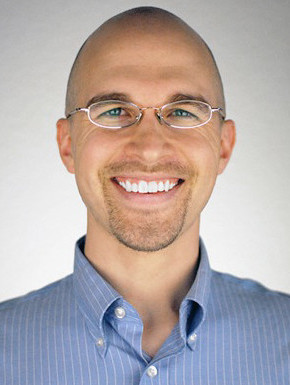
    Today, Josh Kaufman, bestselling author of The Personal MBA, joins us on the show to discuss all three of these situations and much more.

    In Josh’s words, “I think in general, business as a domain of knowledge is one of those things that once you learn it…it can help you in all sorts of different areas, even outside of business.” Regardless of whether you’re a teacher, graphic designer, entrepreneur, junior level employee, or manager, becoming familiar with business basics can change your perspective on work and the part you can play in your role.

  • PSA Thursday: How to Slash Your Food Budget, with Rosemary Fotheringham

    [smart_track_player url="https://traffic.libsyn.com/secure/paulaandjaymoney/AA286b_PSA_Thursday.mp3" title="PSA Thursday: How to Slash Your Food Budget, with Rosemary Fotheringham" artist="Paula Pant" social="true" social_twitter="true" social_facebook="true" social_gplus="true" social_linkedin="true" social_stumble="true" social_pinterest="true" social_email="true" ]

    Welcome back to PSA Thursday, a weekly-ish segment in which we talk about how to handle money, work, and life in the year that is 2020.

    Today, we’re tackling one of the biggest line-items on your budget: food.

    According to the Bureau of Labor Statistics, in 2019, Americans spent just over $8,000 on food.

    If you’re on a tight budget, slashing your grocery bill is one of the easiest ways to spend less. But what if you don’t want to compromise on healthy eating?

    Today’s guest, Rosemary Fotheringham, is a Functional Nutritional Therapy Practitioner (FNTP) who’s also on the path to financial independence. She and her husband slashed their monthly grocery bill from $1,200 down to $300 – without eating pasta every night.

    In this episode, Rosemary explains their framework for healthy eating and shares her best tips for eating well on a tight budget.

  • PSA Thursday: Broadcasting Live from FinConX

    [smart_track_player url="https://traffic.libsyn.com/secure/paulaandjaymoney/AA284b_PSA_Thurs_FinConX.mp3" title="PSA Thursday: Broadcasting Live from FinConX" artist="Paula Pant" social="true" social_twitter="true" social_facebook="true" social_gplus="true" social_linkedin="true" social_stumble="true" social_pinterest="true" social_email="true" ]

    Welcome back to PSA Thursday, a weekly-ish segment in which we talk about how to handle money, work, and life in the year that is 2020.

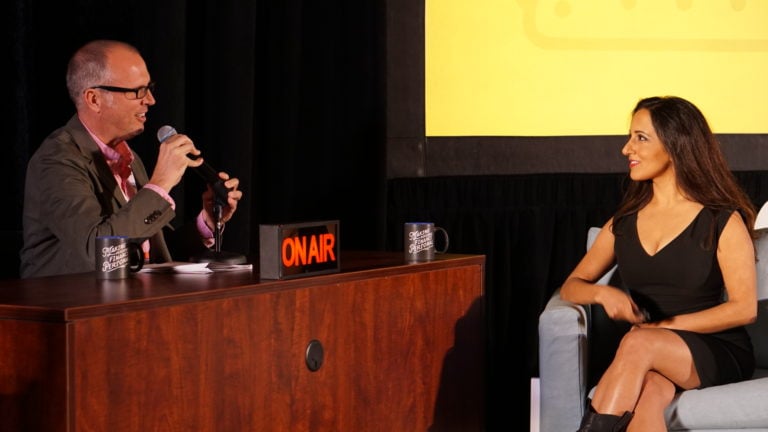
    Paula Pant and Andy Hill broadcast from Dallas, where they’re part of a bare-bones skeleton production crew that’s hosting the 10th annual FinCon, a conference for a community of personal finance podcasters, YouTubers and bloggers.

    On the evening before the event, they reflect on the importance of community, especially when it comes to learning about money management. Enjoy this behind-the-scenes glimpse.

    Paula and Andy discuss:

    • Why FinCon is a great resource for discovering others in the personal finance space. For example, content creators who cover Canada, student loan debt, parenting, etc.
    • Why you shouldn’t hand your critical thinking over to someone else
    • The philosophy of Afford Anything, and why that and the community come first
    • Paula’s worldview on being an “expert” or a “guru” and how you can present yourself differently
    • Paula puts Andy in the hot seat: how does he see himself as a content creator?
    • Leading from behind
  • |

    #284: The Psychology of Money, with Morgan Housel

    [smart_track_player url="https://traffic.libsyn.com/secure/paulaandjaymoney/AA284.mp3" title="The Psychology of Money, with Morgan Housel" artist="Paula Pant" social="true" social_twitter="true" social_facebook="true" social_gplus="true" social_linkedin="true" social_stumble="true" social_pinterest="true" social_email="true" ]

    Do you wrestle with the idea of leaving your savings in an account earning next to nothing versus investing it in the stock market?

    Do you use investment strategies that allow you to work with your nature, rather than against it?

    Are you careful to seek investment advice from those who share your investment goals, or do you get caught up in the trends of day traders?

    Morgan Housel, author of The Psychology of Money, joins us to discuss why investing is not the study of finance, but the study of how people behave with money. Morgan is an award-winning financial journalist, former columnist for the Wall Street Journal and The Motley Fool, and one of the foremost thinkers in the world of investing.

    As a long-term investor who shares our buy-and-hold philosophy, Morgan has behavioral finance insights that can help us invest for financial independence with more clarity and a better understanding of ourselves.

    We discuss how to develop self-awareness around biases, the importance of flexibility for long-term strategies, saving like a pessimist and investing like an optimist, becoming durable in the face of market adversity, the key difference between patience and stubbornness (and how it affects your mindset), expectation management, the importance of bonds and emergency funds, and a difficult lesson about tail risks that Morgan learned at age 17.

  • PSA Thursday: Teaching Technology to the Elderly

    [smart_track_player url="https://traffic.libsyn.com/secure/paulaandjaymoney/AA283b_PSA_Teach_Tech_to_Elderly.mp3
    " title="PSA Thursday: Teaching Technology to the Elderly" artist="Paula Pant" social="true" social_twitter="true" social_facebook="true" social_gplus="true" social_linkedin="true" social_stumble="true" social_pinterest="true" social_email="true" ]

    Welcome back to PSA Thursday, a weekly-ish segment in which we talk about how to handle money, work, and life in the year that is 2020.

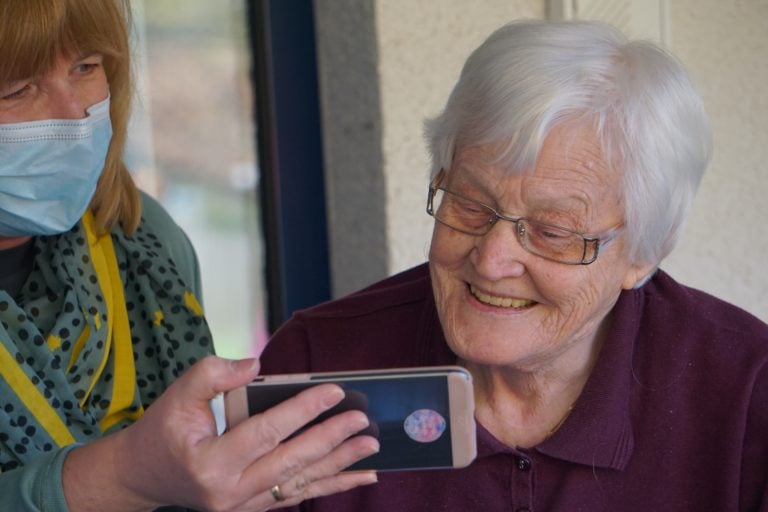
    Many of us have experienced disconnection from our loved ones this year, especially with older family members. It can be difficult to stay in touch when parents and grandparents aren’t technologically savvy. They might not know how to text, how to use their cell phone to place a call, or how to initiate a video call.

    We hope that can change after you listen to this episode.

    To help us learn how we can stay connected with the senior citizens in our lives, we brought on Bria Sullivan. She works for a company that owns more than 300 senior living care facilities, and her role is to provide materials to teach those seniors how to use technology — anything from making a Zoom call to setting up a Chromebook to sending a text message. For the past six years, Bria has also had a supplemental side hustle teaching seniors how to use technology.

    Today, she shares her best tips on how we can do the same with the elders we love.

  • |

    #283: Ask Paula & Joe – Could the Stock Market Be Too Much of a Gamble?

    [smart_track_player url="https://traffic.libsyn.com/secure/paulaandjaymoney/AA283.mp3" title="Ask Paula & Joe - Could the Stock Market Be Too Much of a Gamble?" artist="Paula Pant" social="true" social_twitter="true" social_facebook="true" social_gplus="true" social_linkedin="true" social_stumble="true" social_pinterest="true" social_email="true" ]

    Andrea’s parents have a seemingly salesly financial advisor. He tried to get them to purchase a second life insurance policy, among other potentially pushy moves. Are her parents better off without his advice?

    Teresa can’t shake the feeling that the stock market is more of a gamble than an investment. Is there any advantage to holding funds for the long-run if the market drops and you lose your gains?

    June is curious about the best college planning strategies for families who are working toward, or close to, financial independence. How can you help your children while securing your financial future?

    Big Sister’s little sister rents a mobile home in an area she loves. The owner wants to sell, but her little sister might not obtain financing. Should Big Sister buy the property and sell it to her via seller financing?

    Managing for Mom in Massachusetts has an investment strategy that he wants to run by us. Does it make sense to shift a 50/50 stocks and bonds portfolio to 100 percent stocks, and shift back to a 50/50 split after the market returns to pre-pandemic numbers?

    My friend and former financial planner Joe Saul-Sehy joins me to answer these questions. Enjoy!

  • |

    PSA Thursday: The Affordable Care Act, with Tanja Hester

    [smart_track_player url="https://traffic.libsyn.com/secure/paulaandjaymoney/AA282b_PSA_Thursday_-_Tanja_Hester2.mp3" title="PSA Thursday: The Affordable Care Act, with Tanja Hester" artist="Paula Pant" social="true" social_twitter="true" social_facebook="true" social_gplus="true" social_linkedin="true" social_stumble="true" social_pinterest="true" social_email="true" ]

    PSA Thursday is back! In case you’re a new listener, PSA Thursday is a weekly-ish segment in which we talk about how to handle money, work, and life in the middle of a pandemic.

    With the uncertainty of the Affordable Care Act (ACA) looming before us, many are asking:

    What will happen if the ACA is struck down by the Supreme Court? How can we plan for healthcare – now and in the future? How much will I need saved to cover healthcare in retirement? What can I do if I can’t afford the expensive premiums? 

    As a community of entrepreneurs and early retirees, this is a major concern. 

    To help us understand the healthcare landscape, we brought on Tanja Hester, author of Work Optional and the blog Our Next Life.

    Tanja has extensive experience with the healthcare system. She has a history of pre-existing conditions dating back to childhood, and she has also navigated the marketplace post-retirement.

  • |

    #282: The Smart Way to Start a Side Hustle, with Alan Donegan

    [smart_track_player url="https://traffic.libsyn.com/secure/paulaandjaymoney/AA282.mp3" title="The Smart Way to Start a Side Hustle, with Alan Donegan" artist="Paula Pant" social="true" social_twitter="true" social_facebook="true" social_gplus="true" social_linkedin="true" social_stumble="true" social_pinterest="true" social_email="true" ]

    Has the economic uncertainty of 2020 caused you to think about creating your own stream of income? 

    Has the turmoil of 2020 also caused you to feel so overwhelmed you’ve bought a plot of sand in which you bury your head on a daily basis? 

    We get it. It’s normal to feel paralyzed by everything you need to do before you get your side hustle off the ground. But you don’t have to take the complicated route. There’s another way. 

    Today’s guest, Alan Donegan, is the cofounder of PopUp Business School. It has helped over 7,000 people in six countries start their own companies. The best thing is, Alan teaches others how to quickly – and affordably – start businesses. There’s no fluff, just action. 

    In this episode, Alan shares the simple advice and steps to take to give your side hustle a whirl. Within a month, you’ll know if your idea is viable or not, and all it takes is a few hours over the course of a week. 

  • |

    #281: The Art of Decision-Making, with Annie Duke

    [smart_track_player url="https://traffic.libsyn.com/secure/paulaandjaymoney/AA281.mp3" title="The Art of Decision-Making, with Annie Duke" artist="Paula Pant" social="true" social_twitter="true" social_facebook="true" social_gplus="true" social_linkedin="true" social_stumble="true" social_pinterest="true" social_email="true" ]

    How many times have you made a decision – big or small – only to regret it later?

                “I wanted to fund my IRA this year, but that vacation was calling my name…I should have known better. Now I feel behind.”

                “I really wanted to take that out-of-state job, but I talked myself out of leaving my family and friends behind. Now I’m unhappy thinking about what could have been. How stupid of me.”

                “Ugh, I knew I shouldn’t have eaten all this ice cream, but it was too good to put away. What was I thinking?”

    But…how could you have known?

    We can’t make decisions with 100 percent certainty. Therefore, we can’t know how something will turn out.

    Yet most of us get stuck in analysis paralysis, desperate to gather as much information as we possibly can before making a decision.

    And when that decision doesn’t turn out as we hoped, our response is, “I should have known!”

    How can we break this cycle? How can we accept that we don’t have total control over the outcomes of our decisions? How can we forgive ourselves, and others, for not getting it right?

    Most of all: how can we improve our decision making skills to avoid this scenario in the first place?

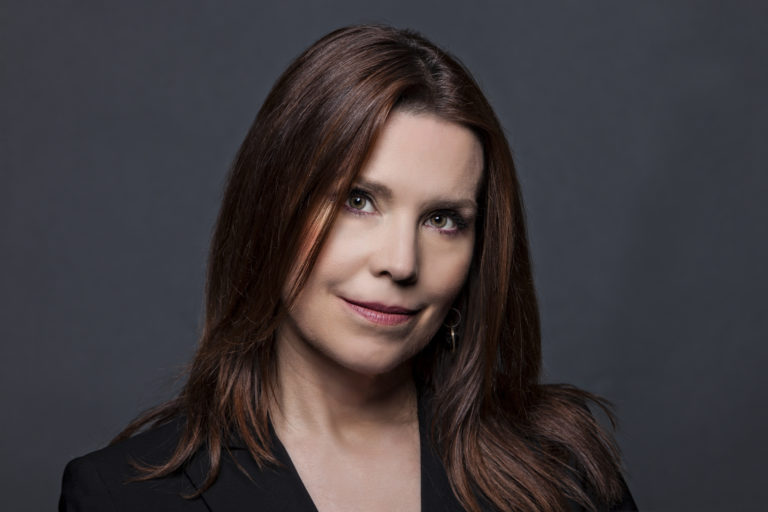
    That’s what today’s guest, Annie Duke, best-selling author of Thinking In Bets, is here to tell us.