Lifestyle

Curious about the financial independence or digital nomad lifestyle? Here are real life accounts of both.

  • |

    #453: The Importance of Having a Life Outside of Work, with Simone Stolzoff

    Today, I sit down with Simone Stolzoff, the brilliant author of “The Good Enough Job.”

    Simone has extensively studied the intricate role of work in our lives, asking the question: “How do we see work as just a piece of an awesome of our life?”

    He also uncovers what we lose when work becomes more than just a job, challenges the prevailing narratives of work as a calling or dream, and shares strategies that can help us build more well rounded lives.

    Together, we explore groundbreaking perspectives on reframing work as an integral part of life, rather than allowing it to consume our entire being. Prepare to be inspired and enlightened as we uncover the keys to unlocking a balanced and fulfilling relationship with work.

  • | | | |

    #449: Ask Paula: Should You Buy Real Estate in Today’s Economy?

    Jackie is a 42-year-old paralegal with two rental properties. She wants to buy three more. She asks for Paula’s thoughts about today’s economy. Should she buy under these economic conditions?

    Jen’s husband will retire with a pension that pays twice their living expenses. Does she still need her own retirement account?

    Rachael just bought a duplex, which she wants to househack. But she’s having second thoughts. Did she bite off more than she can chew?

    “Minouche” is a return caller with new information: she believes that borrowing from Dad is her only path to home ownership. Does this change Paula and Joe’s advice to her? (And is it even true?) And Molly, a concerned mom, shares some thoughts about this situation.

    Former financial planner Joe Saul-Sehy and I tackle these four questions in today’s episode.

    Enjoy!

  • |

    #447: The Human Side of Remote Work, with Nick Bloom

    We talk to Stanford economist Nick Bloom about his groundbreaking research on working from home. 

    Nick has been studying remote work for more than 20 years – since the 1990’s, when people were “telecommuting.” His research, in real-time, looked at how events such as 9/11 shaped attitudes about remote work. 

    The pandemic created a surge of interest in his research. It brought many newcomers to the field. But Nick has the benefit of historical knowledge. He’s spent his career deep-diving into this topic.

    Nick sheds light on the advantages and challenges of remote work, drawing from extensive data and analysis. He shares surprising numbers and statistics. 

    We discuss productivity, collaboration, employee well-being and organizational dynamics. We also discuss the impact of remote work on cities and housing.

    Enjoy!

  • | |

    #443: Building Your Dream Business, with Amy Porterfield

    As a former corporate powerhouse turned successful entrepreneur, Amy knows firsthand the challenges and triumphs of building a business from scratch.

    Amy is the host of the top-ranked podcast “Online Marketing Made Easy,” and the owner of a multi-million dollar digital course business. She is also the author of “Two Week’s Notice,” a guide to quitting your job and building your own business.

    Get ready to be inspired as we uncover Amy’s secrets to building a thriving business and learn how you can apply her proven techniques to achieve your own entrepreneurial dreams.

    Whether you’re just starting out or looking to take your business to the next level, this episode is packed with actionable advice that you won’t want to miss.

  • |

    #438: Life in Five Senses, with Gretchen Rubin

    “Do you want to save money? Or do you want to enjoy your life?”

    That’s a common question, but it’s strange. It assumes these ideas are opposites: frugality is synonymous with deprivation; spending is a proxy for enjoyment.

    That premise is wrong.

    Let’s stop conflating spending with happiness. Let’s stop using “savings” or “free” as a euphemism for second-tier or sucky.

    Most online articles that discuss free or frugal enjoyment are poorly-thought-through listicles that offer half-baked ideas, like “go to the park” or “host a potluck.” Not only are these insufferable, they also miss the point. Behavioral change doesn’t come from a laundry list. It comes from cognitive reframing.

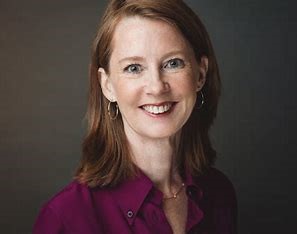
    To facilitate this reframe, we’ve invited Yale-educated former attorney and world-renowned happiness expert Gretchen Rubin to return to our show.

    Gretchen was a guest on Episode 40, when she cited research about effective habit formation. She returns with a methodical, structured look at how to derive more joy from daily experiences through heightened sensory awareness.

    She draws from science, philosophy, medicine, literature and psychology to tell a layered story about how to find simple pleasures in everyday things. Her latest book, Life in Five Senses, came out on April 18 and immediately hit the New York Times bestseller list.

    Enjoy!

  • | | | | |

    #434: Tips for Tipped Workers, with Barbara Sloan

    The majority of financial advice is geared to people with 9-5 jobs:

    • “Negotiate for a raise.”

    • “Max out your 401k match.”

    • “Budget based on your income.”

    Where’s the financial advice for people who earn money in tips: restaurant servers, bartenders, hairstylists, concierge, valets, ushers, nail salon workers, strippers, or other service industry professionals?

    What about gig economy workers, freelancers and entrepreneurs? People who don’t earn a regular paycheck?

    Not only do these workers earn a volatile and unpredictable income, they also often don’t have job-provided health insurance, retirement plans, and paid time off. They need to provide themselves with these benefits. What should they do?

    That’s where Barbara Sloan comes in. She’s a financial coach and author of “Tipped: the life changing guide to financial freedom for waitresses, bartenders, strippers, and all other service industry professionals.”

    Her book and advice applies to anyone who works outside of the traditional confines and systems.

    If you (or someone you know) works for tips, you’ll love Barbara. And if you’re curious about exploring work outside of the normal 9-to-5, and wonder how to set yourself up for financial success when your income is hit-or-miss, this episode is for you.

    Enjoy!

  • | | | | |

    #430: Ask Paula: My Parents Are Drowning In Credit Card Debt. What Should I Do?

    D is worried that she’s going to suffer from her parents’ poor financial choices. Is it time to confront them about it?

    An anonymous caller and her fiance both own a house. Which one do they move into after the wedding?

    In a world of rising inflation, Nick wants to know if it’s time to change the way he saves for his future.

    Another anonymous caller wants to buy a second home within a decade. How does she start planning now?

    Former financial planner Joe Saul-Sehy and I tackle these four questions in today’s episode.

    Enjoy!

    P.S. Got a question? Leave it here.

  • | |

    #427: Start a Micro-Business & Build Multiple Income Streams, with Nick Loper

    Okay, maybe the phrase “side hustle” is overused. But it’s also misunderstood.

    “Side hustle” is a catch-all term that people use to describe everything from low-paid gig economy labor – Doordash, Uber Eats, Rover – to six-figure consulting for Fortune 500 companies.

    On the remote-work side, it includes everything from freelance graphic design (services) to selling bundles of presentation deck templates (digital products).

    On the physical goods side, it includes everything from wholesaling (real estate) to flipping antique grandfather clocks (personal goods).

    On the e-commerce side, your side hustle might mean starting your own manufacturing, white-labeling and shipping services, in which you distribute toothpaste or trash can lids or desiccant packs.

    How do we make sense of such an umbrella concept?

    In this interview with Nick Loper, we learn how to wrap our minds around the huge world of hustles. We talk about how to understand the options available, choose a path, and start with minimal capital.

    This interview originally aired as Episode 85.

    Enjoy!

  • | |

    #426: Key Takeaways: Best Lessons from the Last Year, with Paula Pant

    Behavioral researcher, Vanessa Van Edwards, talks to us about the critical importance of charisma – and how to use the perfect blend of warmth and competence to be charismatic.

    Dr. Michael Slepian walks us through what secrets mean, what they cost, and how we think about them.

    We dive into the world of long distance real estate investing, and talk about two of the major components of investing – Cash and mindsets – to help you determine if long distance real estate investing is right for you.

    International best selling author, Julie Winkle Giulioni, reviews eight dimensions of career development and how to navigate them.

    Chris Hutchins, entrepreneur and life hacker extraordinaire, spills his best secrets on optimizing spend to travel more cheaply.

    Kiersten and Julien Sanders join us to discuss money topics for couples, and their framework for being financially independent in 15 years.

    Stanford professor Jeremy Utley breaks down the art of creativity and producing new ideas – and shares actionable tips on how we can be more creative and have better ideas.

    Dr. Daniel Crosby discusses how we are not wired to be good investors, and how to overcome our evolutionary wiring.

    Enjoy this compilation of our favorite episodes to air in the second half of 2022.

  • | |

    #424: The Power of Knowing When To Walk Away, with Annie Duke

    We’re taught to stay in the game.

    Persist. Be gritty. Try, try again.

    But sometimes, the best decision is to walk away. Move on.

    How do you know when that’s right? When should you double-down … and when should you fold?

    Today’s guest, Annie Duke, won more than $4 million as a professional poker champion. She wrote the bestselling book Thinking in Bets and co-founded a nonprofit that teaches kids decision-making skills.

    Her most recent book, “Quit: The Power of Knowing When To Walk Away,” teaches the behavioral science, mental models and recognition of cognitive biases needed to successfully quit.

    It highlights real-world examples of startup founders, athletes, mountaineers, and entertainers who either quit – or didn’t – and explains how to make a wise, grounded choice.

    She joins us on today’s episode to describe the forces that hold us back from quitting – and how to recognize when quitting could lead to a better life.