Lifestyle

Curious about the financial independence or digital nomad lifestyle? Here are real life accounts of both.

  • |

    #488: Gut Instincts and Big Decisions, with Morgan Housel

    Ever made a flippant, seemingly minor decision that radically changed the course of your life?

    Morgan Housel has experienced this. At age 17, he made a quick decision that ended up saving his life. Sadly, two of his friends were less fortunate.

    He shares that story in today’s podcast episode, and sheds light on the lessons he’s learned from it.

    Housel says that his lifesaving choice — and many of our other important decisions — are snap verdicts, ones that we don’t spend much time thinking about.

    If pivotal moments are decided in a flash, how do we navigate risk? How do we evaluate our options?

    Housel says this comes understanding concepts that remain constant, consistent, and universal.

    We need to accept that humans aren’t rational. We must appreciate the reasons why the best answer doesn’t always win. We ought to remember that we overlook many good things happening around us. These constants will most likely impact our futures.

    Housel was named by MarketWatch as one of the 50 most influential people in the market. He is the New York Times bestselling author of The Psychology of Money. His new book is titled Same As Ever.

    He joins us to discuss the ideas in his latest book.

  • | |

    #483: Thriving in a High-Pressure World, with Jennifer Breheny Wallace

    Competitive. Results oriented. Driven to be the very best.

    These are a few ways to describe achievement culture.

    Achievement culture can also be described as stressful, high pressure and unhealthy.

    Yet, there is consistently the pressure – internally and externally – to make more money, be a better parent, spouse, friend, or employee. These burdens comes at a heavy cost to our well-being.

    Jennifer Breheny Wallace, author of the New York Times Best Seller “Never Enough: When Achievement Culture Becomes Toxic – and What We Can Do About It” shares with us how to manage our need for success AND how to avoid the toxic traps that can accompany obsession with success.

    She offers insights into the consequences of this culture on individuals’ mental health, and overall well-being, while also discussing practical solutions to common challenges.

    If you’ve ever felt the burn of trying to do it all, or if you just want a smarter way to navigate success without losing your sanity, the insights shared in this interview will help you develop a more fulfilling and balanced life.

  • | | | |

    What Do Charlie Munger, Taylor Swift, and a NASA Astronaut Have in Common?

    Hey Afforders — Three stories today: One about Charlie Munger, one about Taylor Swift, and one about a ​NASA astronaut​ who also starred (no pun intended) on the Big Bang Theory. Charlie Munger’s Deathbed Regret A few weeks before he died, Charlie Munger was asked if he had any regrets in life. Only one, he…

  • | | |

    #480: Your Blueprint for Life’s Toughest Challenges, with Hal Elrod

    The death of a sibling.

    Being declared dead after a head-on collision with a drunk driver.

    Suffering financially during the Great Recession.

    CANCER.

    Today’s guest, Hal Elrod, has battled all of these tough challenges.

    His little sister passed away in his mother’s arms. Years later, Hal was hit by a drunk driver, broke 11 bones, declared dead, and once revived, learned that he might have to spend the rest of his life in a wheelchair. (He eventually regained his ability to walk.) And after that, he was slammed hard in the wallet during the Great Recession.

    But he’s a fighter. He needed to develop practices to build his resilience.

    So Hal created “The Miracle Morning,” a morning routine practice that gained massive popularity when he released it in 2012.

    The six-step Miracle Morning routine is coined S.A.V.E.R.S. — silence, affirmations, visualization, exercise, reading, and scribing (writing).

    The routine became wildly popular, in part due to its flexibility; Hal explains that time-crunched people can start this as a six-minute routine; dedicating just ONE minute to each of these six steps. Over time, people can see the positive changes that this makes, and expand the time they allot for this.

    The routine is now the subject of a documentary, also called the Miracle Morning, available on Prime Video. Midway through filming, Hal was diagnosed with a rare form of leukemia and given a 30 percent chance of survival. He let the cameras roll as he coped with his diagnosis in real time.

    He joins us on this podcast to describe that experience, and to talk about the practices that he’s used to stay productive in the face of grief, severe injury and cancer.

    He talks to us about:
    — the powerful Five-Minute Rule that helped him recover from a nearly fatal car crash
    — the six most popular personal development practices of the successful
    — specific tactics you can harness to create YOUR most successful life.

    As we move into the New Year, many of you are setting goals and resolutions.

    Hal describes specific, actionable tactics that you can use to build scaffolding and support around your new goals.

  • |

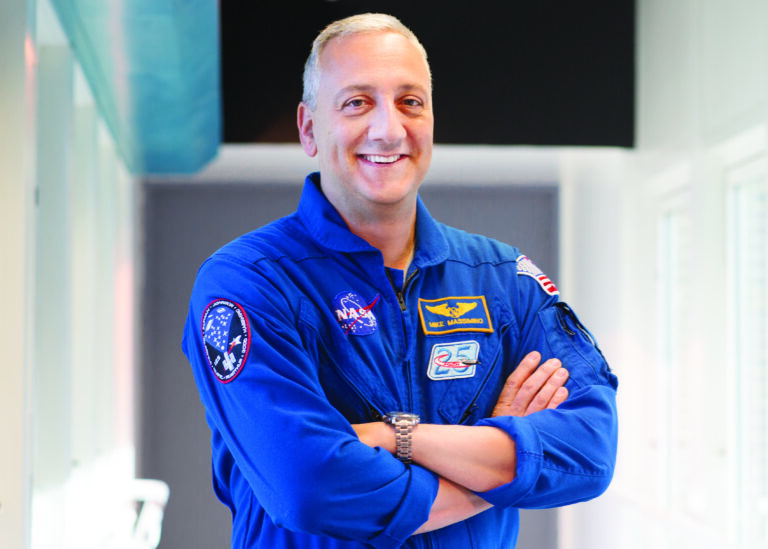
    #476: Astronaut’s Guide to Taking YOUR Moonshot, with Mike Massimino from NASA and Big Bang Theory

    Mike Massimino stared in disbelief at his TV.

    The date was July 16, 1969, and he marveled as Neil Armstrong and Buzz Aldrin landed on the moon.

    At that moment, he knew he wanted to become an astronaut.

    He was six years old.

    But as Mike grew older, he developed more “realistic” dreams. After all, every kid wants to become an astronaut. The chances of making it are incredibly slim. He went to a local college, studied engineering, and took a job at IBM.

    But he couldn’t shake the tiny voice inside that said – “why not try?”

    So Mike upended his life. He enrolled in a Ph.D. program at MIT, and then proceeded to fail the qualification exam so horrifically that his professors gently suggested that perhaps a doctorate isn’t right for him.

    He battled to pass the exam on his second attempt, and went on to teach at Georgia Tech, from where he repeatedly submitted applications to NASA for their astronaut candidate program.

    He was thrilled when he received his acceptance – until he learned he needed stronger vision. At the time, NASA required astronauts to have natural 20/20 eyesight, without surgery.

    So he sought out a doctor to help him re-train his eyesight.

    Then he learned that he’d need to pass a swim test. He was in his 30’s and had never swum. “Can’t I just take a math quiz?,” he joked.

    But he … didn’t let that sink him. (Pun intended).

    In today’s special episode, former NASA astronaut Mike Massimino explains how anyone – including you – can take your own moonshot.

  • | |

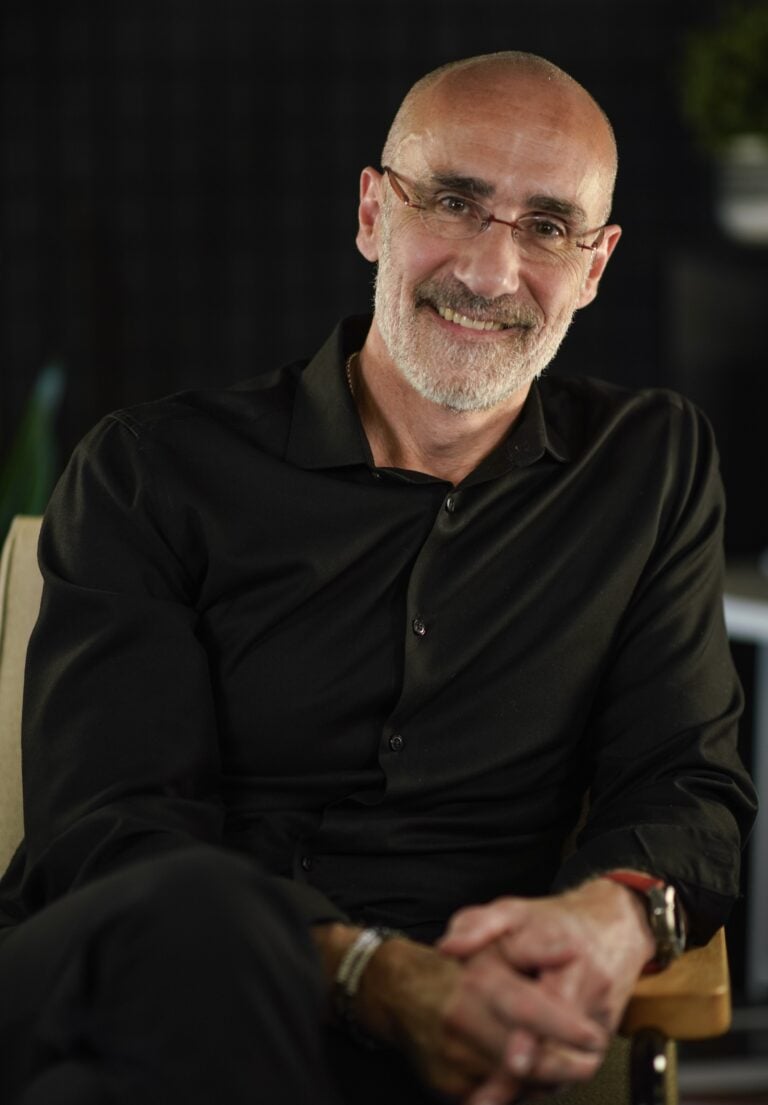
    #472: Happiness Habits, with Harvard Professor Arthur Brooks

    Imagine this: You’re a teenage musical prodigy, a world-class classical French horn player. You drop out of college at age 19 and spend your twenties touring the globe as a musician (including, once, tripping and falling off the stage at Carnegie Hall).

    At age 31, you retire from your musical career, get a Ph.D., and become a professor – first at Syracuse and then at Harvard, where you teach both at Harvard Business School and at the Harvard Kennedy School.

    You publish 13 books and write a column for The Atlantic, which gets noticed by Oprah Winfrey. Oprah then invites you to dinner, where she asks you to co-author a book together.

    This is the life of today’s guest, Harvard Professor Arthur Brooks, whose collaboration with Oprah, a book called Build the Life You Want, focuses on the science and research behind happiness.

    Brooks teaches a class on leadership and happiness to second-year Harvard MBA candidates. In our conversation, we discuss a range of topics, including metacognition (thinking about how to think), the neurobiological basis of ruminating, and how to balance the concept of contentment with the innately human urge for ambition and progress.

    He also offers a formula for happiness: enjoyment + satisfaction + meaning and purpose.

    So – I hope you enjoy this episode; I hope you find it satisfying, and I hope it fills you with meaning and purpose!

    – Paula

  • |

    #464: The Science of Friendship (and How It Improves Your Net Worth), with Dr. Marisa Franco

    More than ever, most people’s lives are packed to the brim with activity. We are trying to fit in demanding jobs and families, commuting and a neverending list of chores. Social lives often suffer.

    It’s no wonder that in 2021, 12% of U.S. adults said they did not have any close friends, up from 3% in 1990.

    This has enormous consequences on our health, productivity, and our ability to grow our net worth, make money, and enjoy life.

    Dr. Mariso Franco, a renowned psychologist and best selling author, shares invaluable insights on the significance of fostering meaningful connections and discusses the detrimental impact of NOT having fulfilling connections in our lives.

    Today’s episode also delves into the importance of connection in the workplace. We chat about how cultivating genuine relationships with colleagues can boost productivity, enhance job satisfaction, and contribute to a positive work environment.

    Throughout the episode, Dr. Marisa Franco shares practical tips and actionable advice on how to nurture and sustain friendships in our fast-paced, digital age and improve our overall well- being.

  • | |

    #462: Cracking the Code of the Rich, with Seth Stephens-Davidowitz

    As a society, we’re fascinated by stories of the rich. We hear news, see social media posts, and read books about how others become wealthy, how to maintain that status, and what their lifestyles look like.

    But what if the media we’re consuming is misleading us?

    Dr. Seth Stephens-Davidowitz’s research shows that the stories about the rich that dominate the popular press are misleading.

    Stephens-Davidowitz holds a PhD in economics from Harvard University. He’s a data scientist and a New York Times bestselling author.

    In today’s episode, we discuss the misleading stories around the rich. We unearth the truth behind those stories, using data rather than narrative.

    We explore the types of businesses that quietly make people millionaires. We describe the ages, occupations and locations of people that become rich, and the unexpected paths they take to achieve this. And we share actionable takeaways that will help you do the same.

  • |

    #460: The Mental Toughness and Confidence Blueprint, with Dr. Nate Zinsser

    Mental toughness is the bedrock of starting a business, growing a multimillion-dollar portfolio, investing in real estate, crushing your debt, retiring early. 

    Today’s guest, Dr. Nate Zinsser, mentors elite athletes, soldiers and executives in confidence and mental toughness. He is the sports psychology mentor for two-time Superbowl MVP Eli Manning and the Director of the Performance Psychology Program at the U.S. Military Academy at West Point. 

    He’s mentored the NHL’s Philadelphia Flyers and NCAA teams, and has been a consultant for the FBI Academy, U.S. Army Recruiting Command, and the NYC Fire Department. He holds a PhD in sports psychology from the University of Virginia.

    In today’s episode, we discuss how to develop the type of mental toughness and confidence that can help you grow your investments, start a business, take risks in your career, make offers on houses, and overall master your financial life.

  • |

    #456: The Empathy Advantage in Business and Leadership, with Stanford Professor Jamil Zaki

    Today, Stanford psychology professor Jamil Zaki shares his research and findings around the science of empathy – and how we can apply this to improving our relationships with colleagues, clients, customers, co-founders, and business and investing cohorts.

    Zaki is the director of the Stanford Social Neuroscience Lab, and the author of “The War For Kindness.”

    We’ll break down the science. We talk about why empathy matters in business, investments, and in career growth, and we’ll discuss its digital age dynamics. How does AI impact the way in which we relate to others?

    If you want to learn the science of emotional intelligence, and how to apply this to your career and business interactions, you’ll learn a lot from today’s episode.

    Enjoy!