Why it matters
Jensen Lost the China Argument, Too
Here’s the thing. The U.S. and China are in a tight race to see who’s going to win AI.
And whoever wins AI, wins.
Imagine a military conflict between two nations, one of which has substantially better AI capabilities than the other. Yeesh. It wouldn’t be a fair fight.
Right now, China is beating the U.S. in robotics.
The U.S. is beating China in advanced chips — by a LOT.
And the U.S. has a slight lead in frontier models, but it’s still anyone’s game.
The U.S.’s biggest advantage right now is chips, which is why export controls matter so much.
There are two schools of thought:
“Hook them” — Jensen Huang has been a proponent of the idea that we should trade with China more. He argued that China is going to have AI regardless, so let’s make sure that they develop their AI on U.S. hardware.
To be clear, Jensen is not proposing some “let’s be friends” diplomatic argument. His position is that we should get China dependent on American chips and software. Dependence gives the U.S. leverage.
“Starve them” — Dario Amodei from Anthropic has the opposite view. He believes we shouldn’t be selling the best, highest-quality chips to our adversaries.
Dario argues that we should starve them. Hold back our best chips so that China falls behind.
Both of these are arguments as to how the U.S. can win the AI race — But they’re very different strategies.
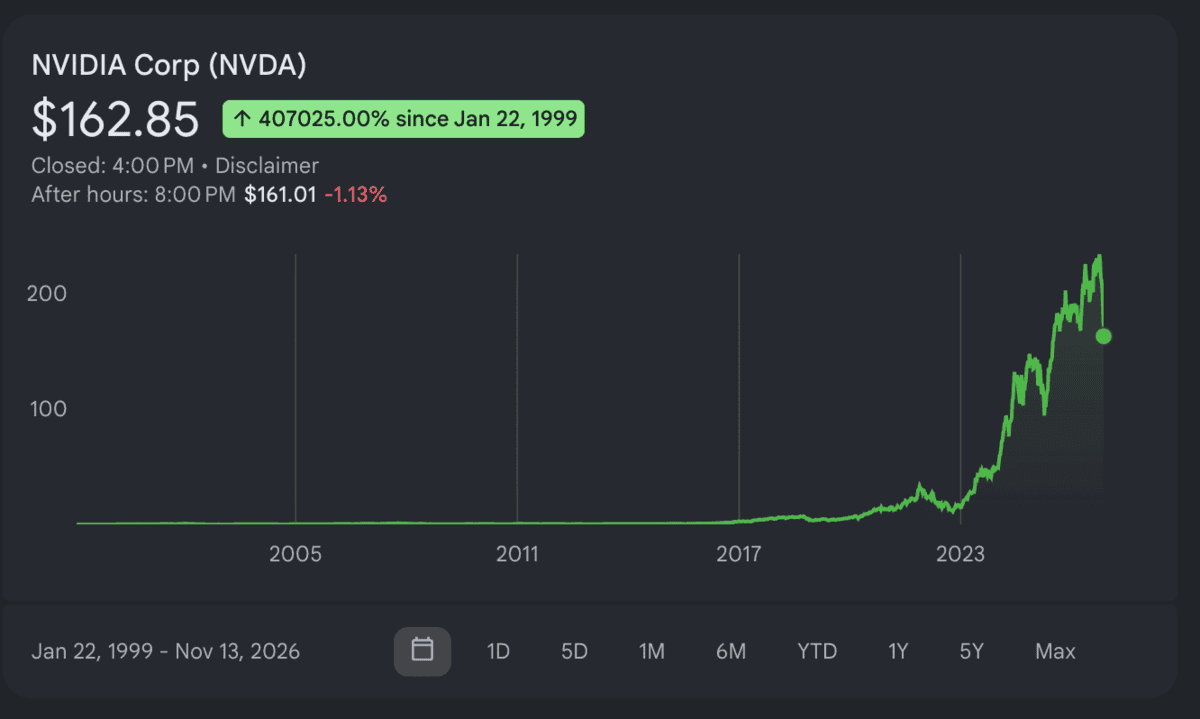
And when Jensen resigned from NVIDIA, he also lost the “hook them? or starve them?” argument.
Now that Jensen no longer holds power, the voices that are overwhelmingly suspicious of China — known as the “China hawks” — have unfettered influence. The “make them dependent” camp lost their loudest and most influential voice.
And there’s now a decent chance that the U.S. is going to clamp down on export controls.
There’s bipartisan support in the Senate for tighter export controls. This comes in the form of three proposals:
— The Chip Security Act, which would crack down on chip smuggling. (Tough time to be a Chinese spy.)
— The AI Overwatch Act, which would give Congress greater oversight over advanced chip exports.
— The Match Act, which would require U.S. allies to stop selling chipmaking equipment to China.
There’s also a loophole that the Commerce Department is currently trying to close — the “rent it remotely” loophole, which is how Chinese firms right now are renting access to NVIDIA chips in Malaysia and Singapore.
When Jensen lost his company, he also lost the China argument. The hawks have serious momentum.
This means (likely) fewer chips will flow to China, especially the highest-quality variety.
In the short term, that’s bad for NVIDIA’s sales, because it closes off part of their market. Jensen estimated this could be worth about $50 billion (not just to his company, but the whole market).
But in the long term, more importantly, this may give China increased incentive to develop their own chips.
It’s worth asking the question, “How has the ‘starve-them’ strategy worked so far?”
The U.S. has restricted chips to China for years, and China has caught up anyway. Stanford’s 2026 AI index has found that the performance gap between the best U.S. and Chinese models has shrunk to only 2.7 percent — down from 17 to 31 percentage points in May 2023. In other words, the gap is narrowing.
That’s why Jensen argues that starving China has just made them scrappy and more efficient. DeepSeek is an example of this.
Hawks would argue that China’s homegrown chips still aren’t good enough. DeepSeek hit a wall trying to train on Huawei chips.
Let’s turn our attention to the question, “Does China want chips from the U.S.?”
And the answer diverges depending on whether you’re talking to everyday entrepreneurs or the Chinese Communist Party, the CCP.
Many Chinese entrepreneurs want chips from the U.S. — They would agree with Jensen’s side of the debate.
But the CCP wants to develop China’s internal chip-making capabilities through companies like Huawei.
Both the China hawks and the CCP want the same outcome, but for different reasons.
Both want China to be off of US chips. The hawks want it because they think it’ll slow China down. The CCP wants it so that they don’t become dependent on the U.S., and so that their own chip industry can flourish through companies like Huawei.
And so strangely, it looks both the U.S. and China governments are in agreement. Both governments want China to be off of U.S. chips, but for different reasons.
The result is going to be two separate AI ecosystems. And then the question becomes, which ecosystem will the rest of the world run on?
And whoever wins that question wins the world.
How this affects your 401k: In the short term, tighter export controls mean less China revenue for Nvidia, and that’s 6% of your index fund.
But that’s just one company. Here’s the bigger worry:
Chips are the biggest lead that the U.S. has in the AI race. By A LOT. (Remember, they’re absolutely smoking us in robotics.)
If the “starve them” strategy ends up backfiring, then our lead shrinks, and so does the reason that AI stocks are priced so high.
Now, AI stocks are the thing that’s been carrying the market for the last 4 years.
And it’s been driving a huge chunk of our GDP growth — (between one-third to one-half of GDP growth, depending on who’s counting) — and we need that growth to be strong because that’s how we outpace our deficit.
If we lose the AI edge and our stock market declines and GDP slows down and the deficit spirals out of control, then we would either need to get very aggressive with the levers of spending and taxes (which is going to be a political nightmare) or could we end up in a big financial crisis.
Sorry to ruin your morning coffee.