FIRE

Interesting in learning more about the Financial Independence Retire Early (FIRE) movement? We share our thoughts on FIRE strategies here.

  • |

    PSA Thursday: The Affordable Care Act, with Tanja Hester

    [smart_track_player url="https://traffic.libsyn.com/secure/paulaandjaymoney/AA282b_PSA_Thursday_-_Tanja_Hester2.mp3" title="PSA Thursday: The Affordable Care Act, with Tanja Hester" artist="Paula Pant" social="true" social_twitter="true" social_facebook="true" social_gplus="true" social_linkedin="true" social_stumble="true" social_pinterest="true" social_email="true" ]

    PSA Thursday is back! In case you’re a new listener, PSA Thursday is a weekly-ish segment in which we talk about how to handle money, work, and life in the middle of a pandemic.

    With the uncertainty of the Affordable Care Act (ACA) looming before us, many are asking:

    What will happen if the ACA is struck down by the Supreme Court? How can we plan for healthcare – now and in the future? How much will I need saved to cover healthcare in retirement? What can I do if I can’t afford the expensive premiums? 

    As a community of entrepreneurs and early retirees, this is a major concern. 

    To help us understand the healthcare landscape, we brought on Tanja Hester, author of Work Optional and the blog Our Next Life.

    Tanja has extensive experience with the healthcare system. She has a history of pre-existing conditions dating back to childhood, and she has also navigated the marketplace post-retirement.

  • | |

    #271: Retirement Planning in 2020, with Dr. Wade Pfau

    [smart_track_player url="https://traffic.libsyn.com/secure/paulaandjaymoney/AA271.mp3" title="Retirement Planning in 2020, with Dr. Wade Pfau" artist="Paula Pant" social="true" social_twitter="true" social_facebook="true" social_gplus="true" social_linkedin="true" social_stumble="true" social_pinterest="true" social_email="true" ]

    Are you wondering how in the world you’re supposed to plan for retirement given the craziness of the year 2020?

    You’re not alone.

    That’s why we brought Dr. Wade Pfau on the show. Dr. Pfau is a Professor of Retirement Income for the American College of Financial Services. Dr. Pfau has made a major name for himself within the field of retirement planning. He’s a two-time winner of the Journal of Financial Planning Montgomery-Warschauer Award and two-time winner of the Academic Thought Leadership Award from the Retirement Income Industry Association.

    Dr. Pfau also won an award for best paper in the retirement category from the Academy of Financial Services. In 2014, he was named “40 Under 40” by InvestmentNews. He is a co-editor of the Journal of Personal Finance, and he speaks frequently at national conferences of organizations for financial professionals.

    He is a RetireMentor for MarketWatch, the Director of Retirement Research for McLean Asset Management, and an Expert Panelist for The Wall Street Journal. He holds a doctorate in economics from Princeton University, and he’s also a Chartered Financial Analyst.

  • |

    #246: Pain, Grief, and the Pursuit of Financial Independence, with Jillian Johnsrud

    [smart_track_player url="https://traffic.libsyn.com/paulaandjaymoney/AA246.mp3" title="Pain, Grief, and the Pursuit of Financial Independence, with Jillian Johnsrud" artist="Paula Pant" social="true" social_twitter="true" social_facebook="true" social_gplus="true" social_linkedin="true" social_stumble="true" social_pinterest="true" social_email="true" ]

    Jillian Johnsrud grew up at the poverty line. Her mother had two children by age 19, and Jillian was raised in a town of 700 people, living in a home that struggled to afford the basics.

    She married her husband when she herself was 19 years old. During their first year of marriage, they lived in a camper and earned a combined income of $12,000.

    Her husband joined the military after graduating from college. They relocated to Washington D.C., where they earned a combined $60,000 per year. They saved half of their income and used their savings to wipe out $55,000 of debt.

    At 22 years old, Jillian and her husband adopted a son. Two years later, at age 24, the couple had accumulated their first $100,000. The following year, they gave birth to a second child.
    Jillian and her husband continued saving half of their income. Eventually, they bought a house in cash, invested in two rental properties, and built a portfolio of index funds.

    By age 32, Jillian and her husband achieved financial independence. And they built this on a modest five-figure income.

    How did Jillian and her husband live on $12,000 per year? How did they save their first $100,000 by age 24? What sacrifices did they make? And how did reaching financial independence change their relationship with money? Find out in this raw, emotional interview.

  • |

    #236: How We Saved $1 Million and Retired at 31 and 32, with Kristy Shen and Bryce Leung

    [smart_track_player url="https://traffic.libsyn.com/paulaandjaymoney/AA236.mp3" title="How We Saved $1 Million and Retired at 31 and 32, with Kristy Shen and Bryce Leung" artist="Paula Pant" social="true" social_twitter="true" social_facebook="true" social_gplus="true" social_linkedin="true" social_stumble="true" social_pinterest="true" social_email="true" ]

    Can you imagine living on 44 cents a day?

    Kristy Shen doesn’t need to imagine it. She lived it.

    Kristy grew up in rural China, where 85 percent of the population lived in abject poverty.

    When she was eight, her family emigrated to Canada. In Kristy’s eyes, her family’s newfound ability to buy a can of Coca-Cola meant that they had “made it.” Kristy loved her Coke can so much that she turned it into a toothbrush holder.

    Years later, Kristy met Bryce Leung at university, where they were classroom lab partners. They married, settled in Toronto and started saving for a downpayment on a house.

    When their down payment savings hit $500,000, they started to question the wisdom of dumping their money into an expensive personal residence.

    Fueled by curiosity, they stumbled down the financial independence rabbit hole. After countless hours of research and number-crunching, they ditched their plan to buy a house and invested their $500,000 into the stock and bond market. Around seven years later, their net worth reached $1 million.

  • |

    #222: Seven Ways to Escape the Rat Race, with Michael Robinson

    [smart_track_player url="https://traffic.libsyn.com/paulaandjaymoney/AA222.mp3" title="Seven Ways to Escape the Rat Race, with Michael Robinson" artist="Paula Pant" social="true" social_twitter="true" social_facebook="true" social_gplus="true" social_linkedin="true" social_stumble="true" social_pinterest="true" social_email="true" ]

    Michael Robinson and his wife, Ellen, achieved financial independence at age 33. They ‘retired’ (they still enjoy working) three years later at age 36 on two five-figure incomes. Today, Michael and Ellen are raising their two children to be bilingual by slow traveling throughout Latin America.

    Michael and Ellen blog about their FIRE adventures at uncommondream.com. They believe that “the Uncommon Dream is the dream pursued – the dream met with planning, action, and sacrifice. With just a dream and those three tools, you can accomplish almost anything.”

    Today, Michael joins us on the show to talk about the seven ways that he and Ellen escaped the rat race and achieved FI at 33.

  • |

    #217: Financial Independence – My Philosophy and Origin Story, on The FI Show

    [smart_track_player url="https://traffic.libsyn.com/paulaandjaymoney/AA217.mp3" title="Financial Independence - My Philosophy and Origin Story, on The FI Show" artist="Paula Pant" social="true" social_twitter="true" social_facebook="true" social_gplus="true" social_linkedin="true" social_stumble="true" social_pinterest="true" social_email="true" ]

    Earlier this year, Cody and Justin from The FI Show interviewed me and asked some excellent questions about my journey to financial independence, entrepreneurship and passion, and minding the gap between your income and expenses.

    We talk about the importance of side hustling and how to create a well-paying job from your skills.

    We touch on real estate and why I chose this strategy to reach FI.

    We also discuss the bone I have to pick with the financial independence movement.

  • | |

    The eerie similarities between owning rental properties and running an online business

    In June, I flew to Atlanta and toured a few of my rental units. This was the second visit I’ve made to these properties in four years.

    During that visit, I met with my property manager and a few of my tenants, and I had lunch with my contractor. He and I met at a suburban Atlanta strip mall. 

    We ordered a basket of spicy chicken wings and fries, then took out a water-logged spiral notebook and planned a $20,000 renovation.

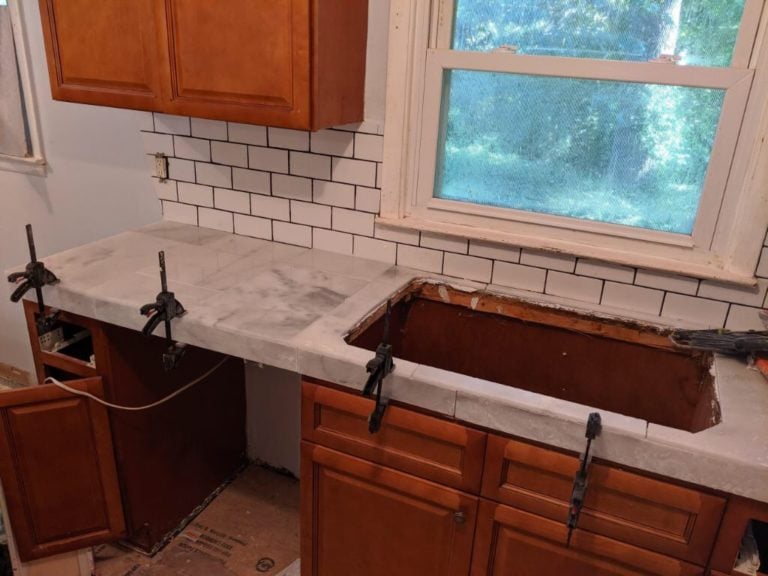
    Here’s what the early brainstormed edition of those plans looked like:

  • |

    #216: Unraveling the Four Percent Rule, with Dr. Wade Pfau

    [smart_track_player url="https://traffic.libsyn.com/paulaandjaymoney/AA216.mp3" title="Unraveling the Four Percent Rule, with Dr. Wade Pfau" artist="Paula Pant" social="true" social_twitter="true" social_facebook="true" social_gplus="true" social_linkedin="true" social_stumble="true" social_pinterest="true" social_email="true" ]

    It’s September! If you’ve been listening to the show for the past few months, then you know that I’m on what I’ve dubbed my September Sabbatical, in which I’m traveling the globe and taking a break from podcast production.

    In light of that, we’re digging through the archives and airing some of my favorite interviews on the show, in between airing interviews I’ve done on other podcasts.

    Welcome to another episode from our archives! This one was recorded in March 2018, and Dr. Wade Pfau had a ton of insight into the four percent rule that so many of us are concerned with.

    First, here’s a brief history of how the four percent rule came to be.

    In 1994, William Bengen decided to look at 30-year timespans throughout U.S. History, beginning with the year 1926.

    He worked under the assumption that a retiree held 50 percent stocks (in the form of S&P 500 Index), and 50 percent bonds (intermediate-term government bonds).

  • |

    #215: Financial Independence in Seven Stages, with Joshua Sheats

    [smart_track_player url="https://traffic.libsyn.com/paulaandjaymoney/AA215_Sabbatical_Joshua_Sheats.mp3" title="Financial Independence in Seven Stages, with Joshua Sheats" artist="Paula Pant" social="true" social_twitter="true" social_facebook="true" social_gplus="true" social_linkedin="true" social_stumble="true" social_pinterest="true" social_email="true" ]

    We are really digging into the archives with today’s episode. This originally aired back in 2016!

    Besides being another fun and fascinating interview, this is one of our most popular episodes. Which isn’t surprising, given the topic we’re exploring. 🙂

    Financial independence means many things to many different people, which might be why we find it challenging to settle on a definition that everyone can agree on.

    Regardless of what your personal definition is, Joshua Sheats, a financial planner and host of the well-known Radical Personal Finance podcast, says that financial independence can be separated into seven stages.

  • |

    #214: The Tables Have Turned – My Interview on ChooseFI

    [smart_track_player url="https://traffic.libsyn.com/paulaandjaymoney/AA214.mp3" title="The Tables Have Turned - my Interview on ChooseFI" artist="Paula Pant" social="true" social_twitter="true" social_facebook="true" social_gplus="true" social_linkedin="true" social_stumble="true" social_pinterest="true" social_email="true" ]

    It’s September! If you’ve been listening to the show for the past few months, then you know that I’m on what I’ve dubbed my September Sabbatical, in which I’m taking a break from podcast production and traveling the globe.

    In light of that, we’re digging through the archives and airing some of my favorite interviews on the show, in between airing interviews I’ve done on other podcasts.

    I’m super excited to share an interview I did with Brad and Jonathan of ChooseFI back in December 2018. It was fun to have the tables turned, and Brad and Jonathan left no stone unturned in their interview with me.

    If you ever wanted to know my origin story, including where my love for travel comes from, where my desire for freedom came from, and how I combined both, then give this interview a listen.