Just because something is a good deal doesn't mean you have to buy it. Bargain-hunting is for consumers. Choose to save your money instead.

When A Good Deal … Really Isn’t
Just because something is a good deal doesn't mean you have to buy it. Bargain-hunting is for consumers. Choose to save your money instead.

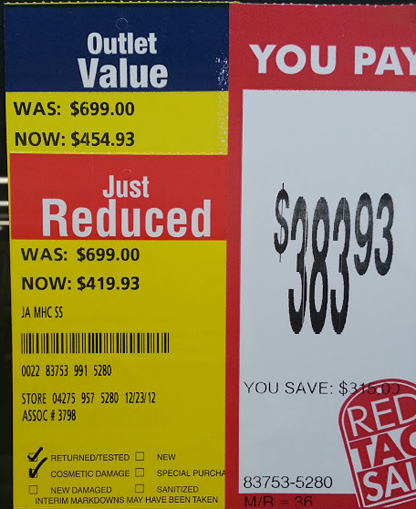
is this a good dealA few months ago, I found a great deal on Groupon: two tickets to a murder-mystery dinner theater for $50, including both dinner and the show. I asked Will if he thought we should get it.

“We’re trying to save money,” he reminded me. It was true. In fact, the previous day we had just had a conversation about how we both wanted to save more.

“But it’s a good deal,” I replied. The package was discounted 70 percent off the normal price.

He shook his head. “Just because it’s a good deal doesn’t mean you should buy it.”

He was right. Coupons and deals are forms of marketing: they appeal to our thrill of the hunt. They fill us with the immediate gratification of “scoring” a deal. Victory!

That leads to impulse buying. I hadn’t been looking for tickets to a show, per se, but when I found cheap tickets, I almost made a spontaneous purchase.

That’s effective advertising. It’s also bad for our budget.

“Okay, fine,” I told him. “We won’t buy it.” I felt a burst of satisfaction: crisis averted. We had just “saved” $50. That was exciting.

“I Buy, Therefore I Am.”

I’ve hardwired my brain – through self-talk – to get satisfaction from saving money. It produces the same dopamine rush as the novelty of buying something new.

But our strengths are also our weaknesses: this same mental training makes me susceptible to marketing that appeals to my love for frugal finds.

Self-talk is powerful. People buy things that reflect the type of person they want to be.

If my self-talk said, “Paula, you’re sleek and chic,” I’d be drooling over luxury brands and designer labels. Why? The advertising reinforces that self-image.

But my self-talk says, “You’re responsible. You’ve got sensible Midwestern values.” This makes me vulnerable to advertising that fuels that self-image: Groupon deals, Craigslist finds, clearance-rack impulse buys.

But a Craigslist ad is still an ad.

It’s all marketing, every last “80 percent off!” of it. And it’s as pervasive, and as insidious, as glossy magazine ads featuring sexy people wearing $800 pants.

Marketers pay big bucks to get Groupons and coupons in front of you, because they know it works. It appeals to your sense of frugality.

Frugality is just another form of consumerism: it keeps your focus on consumption. Sure, you’re buying for less. You found a cheap couch or a half-off dinner. At the end of the day, though, you’re still buying stuff.

The alternative? Think about what you can contribute to this world … not what you can purchase. Bargain-hunting is for consumers. You’re a creator.


Like This Post? Want More?

You Might Also Like

  • | | | | |

    #552: The Harsh Truth About Getting Wealthy

    Dr. Brad Klontz and Adrian Brambila join us for part two of their three-part series on “harsh truths” about building wealth.

    The first truth sets the tone: being poor sucks. But they quickly distinguish between being “broke” (having no money, which can be temporary) and having a “poor mindset” (which keeps people stuck).

    Even high-income earners can have a poor mindset, they explain, sharing examples of pro athletes and celebrities who earned millions but lost it all.

    The discussion moves to whether the financial system is “rigged.” While acknowledging real systemic challenges, they argue that viewing it as a rigged system leads to powerlessness. Instead, they suggest viewing wealth-building as a game with specific rules to learn and master.

    Several guests share candid stories about their own financial journeys. Brambila describes living in a van while earning seven figures, challenging assumptions about what wealth looks like.

    Klontz reveals how he lost money day trading during the tech bubble, using that experience to warn against get-rich-quick schemes.

    The conversation tackles touchy subjects like distancing yourself from friends with poor money mindsets. Klontz shares how he had to end a friendship with his best man when their different approaches to business created tension. They emphasize this isn’t about income levels – it’s about mindset and habits.

    Through personal examples, they explore why people often undervalue their work. Brambila describes initially pricing his online courses too low due to imposter syndrome. They discuss how both employees and entrepreneurs need to understand their true market value.

    The duo challenges common beliefs about jobs, arguing that “only liars love their jobs” since most people would change how they work if they had financial freedom. They use the example of petting puppies – even a dream job becomes less appealing when you lose control over your time.

    On lottery tickets, they expand beyond just criticizing gambling to examine how get-rich-quick mindsets distract from real wealth-building strategies. Klontz shares research showing 97% of day traders lose money, using this to illustrate why seemingly easy paths to wealth usually fail.

    Throughout the episode, the guests weave together psychology, practical advice, and frank discussion of uncomfortable truths about money. While some of their statements spark controversy, they back up their positions with research and real-world examples from their own lives and their work with clients.

  • | | |

    #401: You Are a Badass at Making Money, with Jen Sincero

    Jen Sincero says she used to be a “grouchy broke person.”

    In her early 40’s, Jen lived in a converted garage, buried in credit card debt and scrounging for spare change.

    She was the type of person who’d join her friends at a restaurant for dinner, order nothing except tap water, and fill up on the complimentary bread basket. She used duct-tape to repair her shoes. Her “splurges” consisted of buying new windshield wipers.

    Despite her struggles, Jen believed that pursuing wealth was…icky. She’d internalized negative social attitudes towards money, such as:

    Money isn’t important. People are.
    Rich people are lucky / gross / shallow.
    You can’t make money doing [insert your-dream-here].
    You have to attend a good college to make money.
    Money is out of my reach.
    It’s lonely at the top.
    Who has that kind of money?
    He/she is only about the money.

    Those negative attitudes, Jen says, were holding her back. So she created a more positive script — such as “I’m good at making money,” and “Money is a tool that helps me live my best life.”

    This attitude shift made all the difference.

    In today’s interview, Jen describes her journey from broke to badass, and she explains how everyone can become more of a maverick at making money.

  • |

    The Next Financial Challenge: 20 Contenders in a Fight to the Top

    Last year I blindfolded myself, threw darts at a list of stocks, and bought the first 10 that I hit. I let them ride for a year and showed you the results. This year I’m embarking on a ploy that’s a tad less crazy, but far more heated: I’m competing against 19 financial writers in a…

  • |

    Why “Get Paid to Travel” is a Myth (And What You Should Pursue, Instead)

    I’ve been in Costa Rica for a week now; a few more days until I fly out. Believe it or not, I came here for work. I spoke at a blogging workshop for the first five days, at the invitation of a publishing company. About a dozen attendees came to learn about blog writing and…

  • |

    Should You Get a Car Loan to Improve Your Credit Score? Heck No!

    One reader asks: I’m young (23), and my fiancee and I are looking at getting her a used car to replace her old clunker. We’re looking in the $6,000 – $10,000 range and easily have the cash to pay for the car. (This is seperate from our emergency fund, we both have 401ks, etc). I’m…