Your Index Fund Is About to Own SpaceX

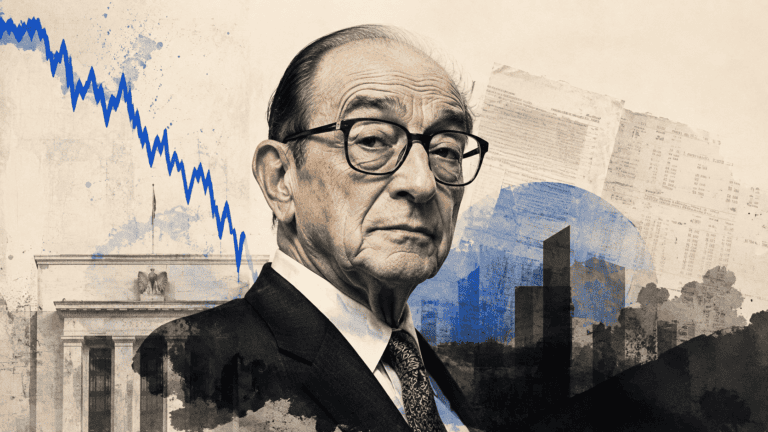
the new Fed Chair enters the chat
The Fed wrapped their June meeting today by announcing their decision to hold interest rates steady …
… but they added a dash of spice.
First, nine of the Fed policymakers said that they think rates should increase. The new chair, Kevin Warsh, said that they had a “good family fight” about it.
Both he and the policymakers repeatedly reaffirmed their commitment to getting inflation down to 2 percent.
Sucks for them (and us), because they also forecasted headline inflation by the end of the year to be 3.6 percent, and core inflation (which strips out food and fuel) at 3.3 percent.
Sooo … nowhere near that 2 percent target.
This was the first meeting in which Kevin Warsh made remarks as the new Fed Chair, and he proved to be an entertaining speaker.
He talked about the “cruel choice” between inflation and the labor market.
He said the Fed’s approach to collecting economic data was “old-fashioned.”
He went after the BLS, which revises its numbers multiple times, often steeply: “We need to get those error bounds down.”
And he said the Fed will stop forecasting its own future actions. “… forward guidance isn’t the business we should be in.”
Break out your popcorn, because the new Fed Chair is shaking things up.
Just buy it now, because we know the price will keep rising.
to the moon, on vibes
Unless you’ve been living under a rock, you’ve certainly heard nonstop chatter about the SpaceX IPO.
When your Cousin Billy asks why you’re still not buying it, try this succinct answer:
“It’s a demand-and-momentum trade.”
Cousin Billy will look at you sideways because he won’t know what that means. This will give you a golden opportunity to crack open a sparkling Perrier and feel temporarily superior.
Okay, so here’s how this breaks down.
Once upon a time, people used to value companies based on the present value of future dollars.
They would look at how much a company is currently earning, and how much they expect the company to earn in the future.
Based on what they expect the company to earn in the future, they would do some fancy math to figure out what that would make the company worth today.

When that practice gets tossed by the wayside, the trading is not based on fundamentals anymore. It’s based on demand and momentum.
Momentum means that people are buying it because people are buying it.
That doesn’t necessarily mean the underlying fundamentals of the company are good or bad. In fact, it doesn’t have any implication about the underlying fundamentals of the company at all. That’s the point. It’s blind to the fundamentals.
It’s simply caught in a hype cycle as the next hot thing.
It’s vibes trading.
And I get it. Rockets are cool. The fact that we can now recycle and reuse rockets — rather than throwing them away after a single use — is very genuinely an inflection point in the history of space exploration.
(Imagine what would have happened with commercial aviation if we had to throw away a Boeing 737 every time it flew from LA to New York. Commercial flight is viable because we can reuse airplanes. Space exploration is now more viable because we can reuse rockets).
So yes, I understand why some people would want to own a piece of the company that pioneered this.
(I also understand why some people wouldn’t.)
But guess what? You can own a piece of that company through an index fund.
Speaking of which, that leads to the next point …
VTSAX and VTI will feature SpaceX … but VOO will not
One fascinating thing about the SpaceX IPO is that it’s given the whole world a crash course in how quickly stocks are added to the underlying indices that are tracked by index funds and ETFs.
It’s also prompted some indices, like NASDAQ, to change their rules.
The CRSP (Vanguard indexes) and the FTSE Russell will start including SpaceX in their indices after five trading days.
The NASDAQ 100 will start including SpaceX after 15 trading days. (They literally changed their policy in order to do this.)
The MCSI will start including SpaceX on June 29th, in both standard and large cap indices.
But the S&P 500 isn’t going to include them until mid-2027.
So what that means is that VTSAX — the Vanguard Total Stock Market Index Fund — and VTI — the ETF version — will begin featuring SpaceX after five trading days, because they track the CRSP US Total Market Index.
That means on Monday, June 22, anyone who holds VTSAX or VTI will become SpaceX stockholders, although it will be a very, very tiny amount. (SpaceX will only make up about 0.12% to 0.20% of VTSAX initially. It won’t be anywhere near the fund’s top 100 holdings.)
But VFIAX — the Vanguard 500 Index Fund Admiral Shares — and VOO — the Vanguard S&P 500 ETF — both track the S&P 500, which requires a 12-month waiting period.
So, going back to my earlier statement — that some of you reading this may want SpaceX stock exposure, and others of you will not —
Now you know which Vanguard index funds and ETFs will include it starting Monday, and which ones won’t for at least another year.
Do with that information what you will.
Note:
(But remember, either way, it’s going to be a very, very, very tiny amount.
Index funds buy shares based on the amount of stock that’s available to the public, not the company’s headline valuation.
And SpaceX has a really, really tiny public free float, around 4% of its value.
So either way, we’re talking about an insanely small amount. It’s not going to come anywhere near Mag 7 status, not for a long time.)
That’s Three Things Today! — the 8th Edition
If you enjoyed this, please forward it to a friend.
If you’re the friend reading it as a forward, join us here.