
social security

  • | | |

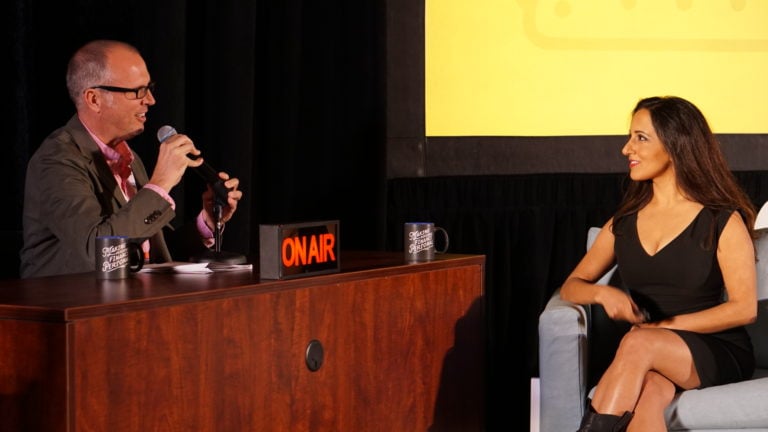
    #541: Your Dream Retirement Might Hinge on This One Choice, featuring Katie Gatti Tassin, host of Money with Katie

    Ever wondered if you’re making the right choice between a Traditional and Roth 401(k)? You’re not alone.

    In this episode, Katie Gatti Tassin, host of MorningBrew’s Money with Katie podcast, joins us to tackle this common retirement savings dilemma.

    We deep-dive into the debate between using Traditional vs. Roth 401(k) accounts for retirement savings, in the context of:

    Future tax rates
    Tax complexities for small business owners and high earners
    Social Security uncertainty
    Stock-based compensation
    Incentives for business owners vs. employees

    Katie explains her strategy for maximizing retirement savings while minimizing taxes. She suggests that for some people in higher tax brackets, maxing out a traditional 401(k) and then investing the tax savings elsewhere might be the way to go.

    But as we dig deeper, it becomes clear that there’s no one-size-fits-all answer.

    We explore the Traditional vs Roth question, discussing how your current income and expected retirement spending can affect your choices.

    It’s not just about the math, though. The unpredictability of future tax rates and policies adds another layer of complexity to the decision.

    Social Security plays a major role, as well. We discuss its current funding situation and the challenges it might face in the future.

    This leads to a fascinating discussion about how AI might impact future costs and lifestyles. Could things actually get cheaper in the future?

    Taxes for high earners and small business owners is another focus. We break down some misconceptions about who falls into high tax brackets. It’s not always as simple as it seems.

    Stock-based compensation is another hot topic. We discuss how it affects corporate decision-making and the wider economy. This leads to an interesting comparison of the incentives for business owners versus employees.

    Throughout the episode, we keep coming back to one key point: no matter which type of account you choose, the most important thing is to contribute as much as you can.

    Your contribution amount has a bigger impact on your retirement savings than the type of account you use.

    By the end of this interview, you’ll have a better understanding of the factors that go into choosing between a Traditional and Roth 401(k). More importantly, you’ll see how this decision fits into the bigger picture of retirement planning and overall financial health.

  • | | |

    #529: Q&A: The Unintended Consequences of Early Retirement

    Anonymous, 60, recently lost her job and is worried about retirement. She owns a paid-off triplex, living in one unit and renting the others for $30,000 a year. She used her 401(k) funds to buy the triplex and now has $50,000 in retirement savings and $150,000 in cash. She expects only $2,400 a month from Social Security at age 67. After losing her son two years ago, she’s seeking advice on managing her underfunded retirement.

    Noelle, 40, and her husband, 49, want to cancel his whole life insurance policy. They are debt-free, own their home, and plan to retire soon, relying on Noelle’s $80,000 income. They have $504,000 in retirement savings. Should Noelle keep her $100,000 term life policy until she retires?

    Sleepless in San Antonio, age 35, plans to retire at 45 but is concerned about how this will affect Social Security benefits, which is calculated based on the top 35 earning years. Should they work longer in order to boost their Social Security benefits?

    Former financial planner Joe Saul-Sehy and I tackle these three questions in today’s episode.

    Enjoy!

  • |

    #330: Ask Paula: How Do I Know If I’m Ready to Retire?

    [smart_track_player url="https://traffic.libsyn.com/secure/paulaandjaymoney/AA330.mp3" title="Ask Paula: How Do I Know If I’m Ready to Retire?" artist="Paula Pant" social="true" social_twitter="true" social_facebook="true" social_gplus="true" social_linkedin="true" social_stumble="true" social_pinterest="true" social_email="true" ]

    Linda is 58 and wondering how to account for her Social Security benefits when thinking through the 25x expenditure equation. Her expected expenses are $100,000 – $150,000. How can she figure out if she’s ready to retire?

    Mr. Man is eligible to retire with a full pension, health benefits, and social security at age 48. He has 20 years to go. Should he include his pension and social security benefits in his financial independence plan, or think of them as extras?

    “Timothy,” a lawyer from Colorado, has $250,000 in a SEP-IRA account that’s invested in mutual funds with fees ranging from 0.61 percent to 1.06 percent. Fees on these funds are projected at $200,000 over the next 20 years. Should he and can he transfer these funds to another SEP-IRA account? What are the consequences of doing that?

    Alise has dreamed of living abroad for long periods of time and wants to buy a property in Portugal before the minimum spend requirement increases. Should she go through with this, or is there another way to gain dual citizenship or travel abroad for long periods of time?

    Former financial planner Joe Saul-Sehy joins me to answer more of your questions.

    Do you have a question on business, money, trade-offs, financial independence strategies, travel, or investing? Leave it here and we’ll answer them in a future episode.

  • |

    #151: Ask Paula – “I Feel Like I Don’t Deserve My Success. What Should I Do?”

    We’re back with another “Ask Paula” episode of the show! As usual, my friend and former financial advisor, Joe Saul-Sehy joins me in answering your questions! Let’s dive right in. Hailey: I just graduated from college with a major in Computer Science and minor in Graphic Design. The whole time – it was rough. I…

  • |

    #128: Ask Paula and Joe – Should I Choose a Roth vs. Traditional IRA and 401k for Early Retirement?

    ​ Antonia, 27, wants to retire in 15 years. She’s trying to figure out whether to contribute to pre-tax or after-tax retirement accounts. Most financial advice for 20-somethings that she’s encountered says to contribute to after-tax (Roth) retirement accounts. These articles assume that a 27-year-old will continue earning money for the next 30+ years, presumably…

  • |

    #120: Ask Paula – I’m Retiring at 53. How Will Early Retirement Impact My Social Security?

    Roger Whitney, age 51, calls himself The Retirement Answer Man. As a financial planner, investment analyst and podcast host, he focuses on helping Baby Boomers craft a traditional (past-age-60) retirement. Today, he joins me to answer two questions that come in from our community. Our first question is from Emily, who says: “I’m trying to…