
Travel the World for the Price of a Honda

Time for Answer the Reader’s Mail: “See the World” Edition!
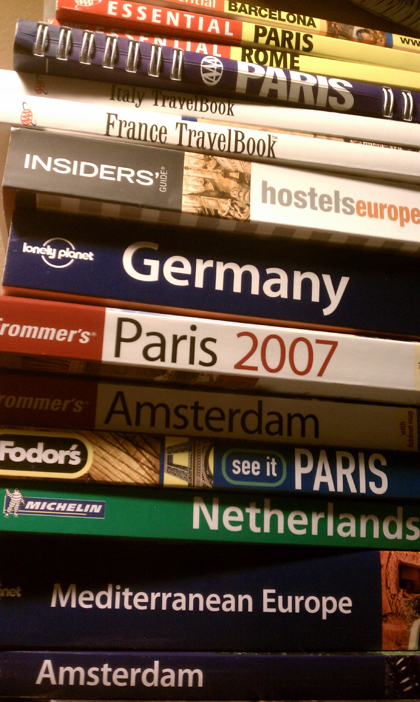
Today’s question comes from Sophia, a 27-year-old financial planner in Minneapolis with a desire to travel the world. Sophia says:
“I’m a world traveler … My husband and I went to Thailand at the beginning of the year and we loved it!”“The more I sit in an office, the more I want to be location independent. I want to be able to help people with their finances from any location. I also want to be in control of my time.”
“I feel this need to travel more, to explore, and not be tied to an office in Minnesota.”
Sophia, your story sounds similar to mine! I became location independent in 2010 after returning from a two-year trip around the world and realizing I couldn’t tie myself down to an office job.
(FYI: “location independence” means, “you can work from anywhere on earth.”)
Sophia poses several questions about travel and location independence. I’m writing two posts to answer her questions. This article covers travel. And this other article discusses location independence.
#1: How much money did you save for your journey abroad?
I saved about $25,000 for the trip. I figured I’d have enough money to globetrot for about a year before things became tight.
It turned out that I vastly overestimated how much the trip would cost. That $25K was enough to get me by for two-and-a-half years — including all airfare and insurance. (Read that story here.)
#2: What’s the one thing you wished you would have packed?
The Kindle hadn’t been invented at the time I traveled, but man oh man, that would have changed everything.
Here’s why:
Many long-term travelers stay in one place, get a job, and immerse themselves in the culture. They can earn money, learn the language and cross the divide between “tourist” and “local.”
While I respect that strategy, that wasn’t my goal. I wanted to see everything: the Pyramids, the Great Barrier Reef, the temples of Bali, the jungles of Borneo. I was on-the-move.
I was determined NOT to work while I was traveling – I wanted no responsibilities. Second, I visited a huge span of countries — 17 countries in 2.5 years. And third, I often ventured into the middle of nowhere.
To visit this many countries, you need a TON of guidebooks and maps. I carried “region-wide” guidebooks – the Middle East, Southeast Asia – but these are thick volumes that eat up half your bag.
Plus I wanted to read for fun, which means I was sloughing through the jungles of Borneo with Harry Potter on my back.
Between the guidebooks and the fun books, I probably lugged 10 pounds of reading material on my back at all times. I’d trade out the fun books at book exchanges, but that meant I’d load up with new books.
And I’d have to carry 4-5 fun books at a time, since I was often in remote areas where I knew I’d have to ration my reading material.
Moral of the story: a Kindle would have solved that problem. Imagine having hundreds of books in digital form. It blows my mind.
#3: What should you have left at home?
Hmm. To be honest, I can’t remember. If I brought anything unnecessary, I’d donate or toss it immediately.
Likewise, if I needed anything, I bought it.
Remember, not all your supplies have to come from a Western country. I’d “re-fuel” in the major capitals: New Delhi, Bangkok, Cairo, Kuala Lumpur.
#4: How did your travels change who you are today?
This may sound strange: world travel is the reason I decided to dedicate my life to teaching personal finance.
Many of my friends would comment, “I’d love to travel but I can’t afford it.”
I hear that statement about loads of big, brash dreams. “I’d love to be a photographer / singer / writer but it’s unrealistic.” “I’d love to work for myself but that’s not realistic.”
Sorry, but that’s simply not true.
As I noted in one of my most popular posts, Quit Your Job and Travel, no one questions how you can “afford” to drop tens of thousands of dollars on a “conventional” expense.
No one says, “I’d love to go to grad school / have a baby / buy a home, but I can’t afford it.” Conventional wisdom says that grad school / babies / homeownership is a worthwhile goal, so people FIND a way to afford it.
People work the night shift so they can save for a down payment on a house.
Isn’t it funny that when society tells us that a goal is achievable, we figure out how to achieve it? But when people say that a goal is unrealistic, we give up. We quit before we’ve tried.
I didn’t do anything special. I avoided debt and I saved $25,000.
Millions of people do EXACTLY that same thing in order to buy a house or to have a baby, and no one fawns over their accomplishment.
Frankly, $25,000 isn’t that much money. It’s the cost of a Honda Accord. It’s one year of private school tuition. It’s a 20 percent down payment on a $125,000 condo.
Have you ever heard anyone say, “Wow, you bought a Honda! How on earth could you afford to do that? You must be rich!”
Or worse yet: “I’d LOVE to own a condo, but I could never afford it.”
No one says that. People have a funny view of money. They spend lavishly on socially-acceptable priorities like homes, cars and education, but they rob their real dreams to pay for that.
Seeing the way that people reacted to my 2-year round-the-world trip drove this point home, so I decided to dedicate my life to teaching one very simple but powerful message:
Cut ruthlessly on the things you don’t care about. Spend lavishly on the things you love. Ignore conventional wisdom.