#764: Q&A: I’m at High Risk for Alzheimer’s. Is $2.5M Enough to Take Care of My Family?
“Buy insurance before you get tested.” That’s the first thing I told an Air Force major whose parents were both diagnosed with early onset Alzheimer’s around age 60.
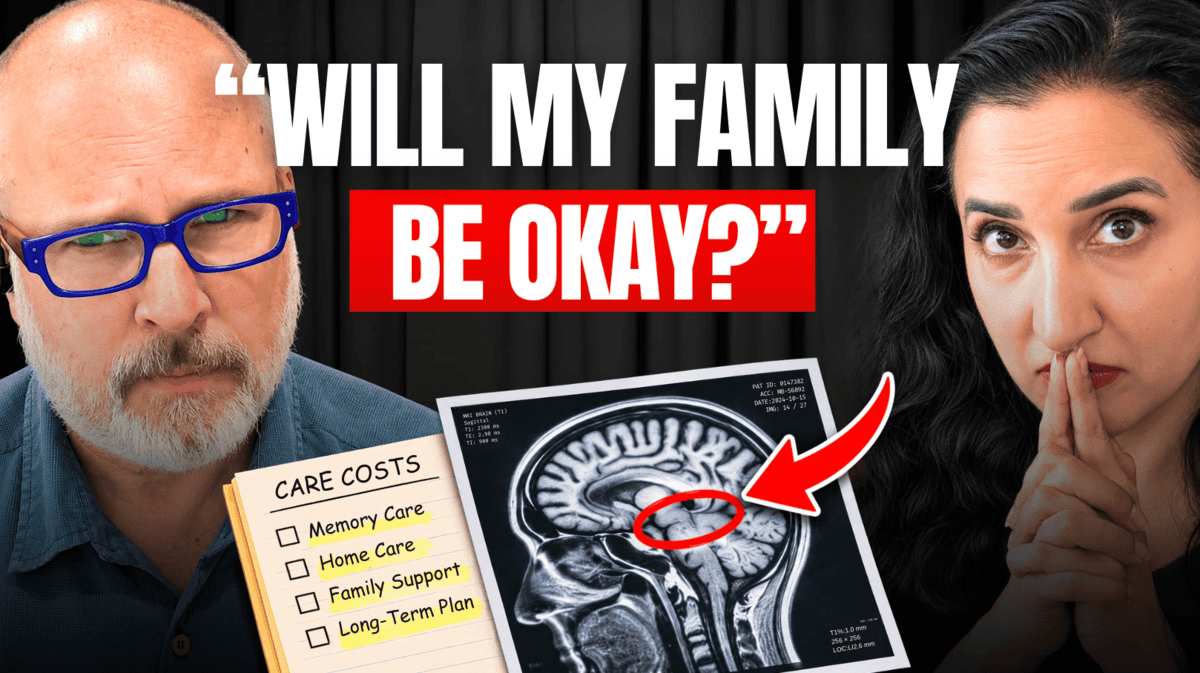
He’s married with two kids under 10 and has about $2.5 million saved. He also has a 25% chance of inheriting the gene pairing that raises his own risk of early onset Alzheimer’s roughly twelvefold, and he wants a plan in place now, while he still has every option.
Joe and I walk him through it: long-term care and disability insurance, the military deadlines that matter, and the legal paperwork any family facing early onset Alzheimer’s should handle sooner rather than later.
Then we help a 58-year-old early retiree decide whether to rent or buy her next home, and we answer a listener weighing whether to pay down a 6% mortgage early.
Listener Questions
The questions we answered this episode
+
Listener Questions
Jared asks: I am active-duty Air Force, currently serving as a major, married with two kids under 10. My wife and I rent, and we have about $2.5 million across our retirement and taxable accounts, with most of it in retirement.
My dilemma is that both of my parents were diagnosed with early-onset Alzheimer’s around age 60, but we started noticing cognitive decline in their mid-50s. Both carry an APOE 3/4 allele, which is a significant genetic risk. I have a 25% chance of inheriting the 4/4 allele, which gives me a 12-times increased risk of early-onset Alzheimer’s.
Because my window of peak cognitive health may be shorter than average, I want to be proactive. What steps should I take regarding genetic testing, and what should I do about insurance? We currently have term life insurance of $1 million each for my wife and me that runs until our kids are past college age. But what steps should I take going forward in terms of disability or long-term care insurance, given my elevated risk? We haven’t secured that insurance yet, and I haven’t done any genetic testing. We’re trying to get a collective perspective before delving into those waters.
Virginia asks: I previously called in on Episode 308 trying to figure out how to pay for travel for the first 5 to 7 years of retirement before taking Social Security. Since that call, I unexpectedly took a higher-paying position, increased my savings, and about two years later inherited approximately $400,000 (mostly in a brokerage account) from my father. Between increased savings, market growth, and the inheritance, I was able to plan for double the travel I originally wanted when retiring at 60. Then in August, at 58 years old, I was unexpectedly offered early retirement from my federal job and took it.
Now, my question involves housing during retirement. I currently own a small condo with no mortgage, but the HOA fees have increased significantly due to inflation and poor budgeting. While the condo mostly meets my needs right now, I will not be able to age in place here due to multiple factors, including having to shovel snow without a garage space. If I move to get the neighborhood and amenities I want, I will either have to rent for about $2,700 a month or take out a mortgage of $200,000 to $250,000. With monthly payments, taxes, insurance, and HOA fees, buying would cost about the same as renting. I have been a homeowner for over 30 years and do not need to make this decision immediately—probably 5 to 7 years down the road. Renting out my current place would net about $550 a month before reserves, or I would need to sell it to access the equity if I buy. How should I evaluate this rent-versus-buy decision?
Anonymous (let’s call them “James”) asks: I have a question about paying off a mortgage early. I’d welcome your thoughts on our specific situation, but I’m also curious how you think about the trade-offs more broadly.
My partner and I are in our late 30s and early 40s. We bought our first home in 2023 for $650,000, put down 20%, and have a $520,000 30-year fixed mortgage at 6%. We pay down the minimum each month and have about $500,000 left on the mortgage. Otherwise, we’re debt-free. We take home about $300,000 a year and spend around $160,000 inclusive of the mortgage. We both max out our 401(k)s, which total about $550,000. We also invest $6,000 a month in a taxable brokerage account where we have about $50,000 in broad-based index funds. We have a young child and his grandparents fund his 529. We also have about $240,000 in a high-yield savings account. While I like the idea of a healthy emergency fund, we are definitely holding a lot in cash.
We’re considering putting extra money toward the mortgage each month. At a 6% interest rate, I think of that as roughly a guaranteed 6% rate of return on that money. Is that the right way to think about it? How would you think about the trade-off between paying down the mortgage versus investing more versus some other option? And would making extra payments today have any downside if we refinance later?
Key Takeaways
The biggest ideas from the conversation
+
Key Takeaways
- Buy insurance before you get genetic testing: If a test shows elevated risk for early onset Alzheimer’s, you have to disclose it on long-term care and disability applications. GINA, the federal genetic discrimination law, mostly covers health insurance and employment, not those policies. Get coverage first, while you truthfully have nothing to report.
- The bigger risk is living, not dying: Joe’s first question was whether $2.5 million would already support Jared’s family if he died. If it would, life insurance may matter less. With early onset Alzheimer’s, the costlier scenario is a long disability or long-term care stay, which can drain money from everyone else in the family.
- If you are at risk for early onset Alzheimer’s, start planning now: The number of choices you have today is far larger than the number you’ll have after a diagnosis. Planning ahead doesn’t make life more rigid. It lets you pivot faster when health, a layoff, or a family emergency forces your hand.
- Put the decision-making triggers in writing: Beyond a durable power of attorney, health care directive, and funded revocable trust, I want Jared to agree in writing with his spouse on the warning signs that mean she takes over the finances. With early onset Alzheimer’s, the person affected may not recognize the change.
- Run the price-to-rent ratio before you decide: Divide a home’s purchase price by a year of rent. Fifteen or below is a clear buy, and 25 or above is a clear rent. In between, your preferences, timeline, and interest rates decide. Also remember the opportunity cost of your down payment.
- Extra mortgage payments early on go furthest: Because mortgages amortize, prepaying early in the loan saves far more interest than prepaying near the end. Joe and I both favor James paying down that 6% mortgage, and extra payments won’t hurt a future rate-and-term refinance. Just avoid a cash-out refi.
Resources
Links, tools and references mentioned
+
Resources
Is your family covered if you can’t work?
Map your insurance, savings and retirement on one free page and find the gaps 👉
affordanything.com/cornerstone
Stacking Benjamins
👉 Joe Saul-Sehy’s show, Stacking Benjamins:
stackingbenjamins.com
The MILMO Show
👉 Lacey Langford’s MILMO Show (money planning for military families):
laceylangford.com
Andrea Baumann Lustig
👉 Our interview with estate planning expert Andrea Baumann Lustig, covering the paperwork families facing early onset Alzheimer’s need:
Episode 725
Chapters
Jump to a specific part of the conversation
+
Chapters
Note: Timestamps are approximate and may vary across listening platforms due to dynamically inserted ads.
| 3:09 | Why most retirements aren’t your choice |
| 6:57 | What Charlie Munger regretted at 99 |
| 15:35 | $2.5M saved and a family history of Alzheimer’s |
| 17:11 | Why to buy insurance before a genetic test |
| 29:46 | How to handle the sticker shock of long-term care |
| 32:21 | Estate paperwork to sign before you need it |
| 38:53 | Why your kids’ guardian and money manager shouldn’t be friends |
| 54:56 | The one ratio that tells you to rent or buy |
| 1:07:39 | Is a 6% mortgage a guaranteed 6% return? |
| 1:14:03 | 15 families could pay off their mortgage. None did. |
Sponsors
Sponsors supporting this episode
+
Sponsors
Ready to clean out your closet and make some extra money? Download the Vinted app for free and start listing. There are no seller fees, so you keep every dollar you earn.
Find 20-year life insurance policies starting at just $276 a year for $1 million in coverage. Compare quotes from top insurers at policygenius.com and see how much you could save.
Need to hire? Spend less time searching and more time interviewing candidates who check all your boxes with Indeed Sponsored Jobs. Listeners get a $75 Sponsored Job credit to give their job post premium status at indeed.com/podcast. Terms and conditions apply.
Got a money question on your mind? Submit it here and it could be featured on an upcoming Q&A episode.