FIIRE: Financial psychology
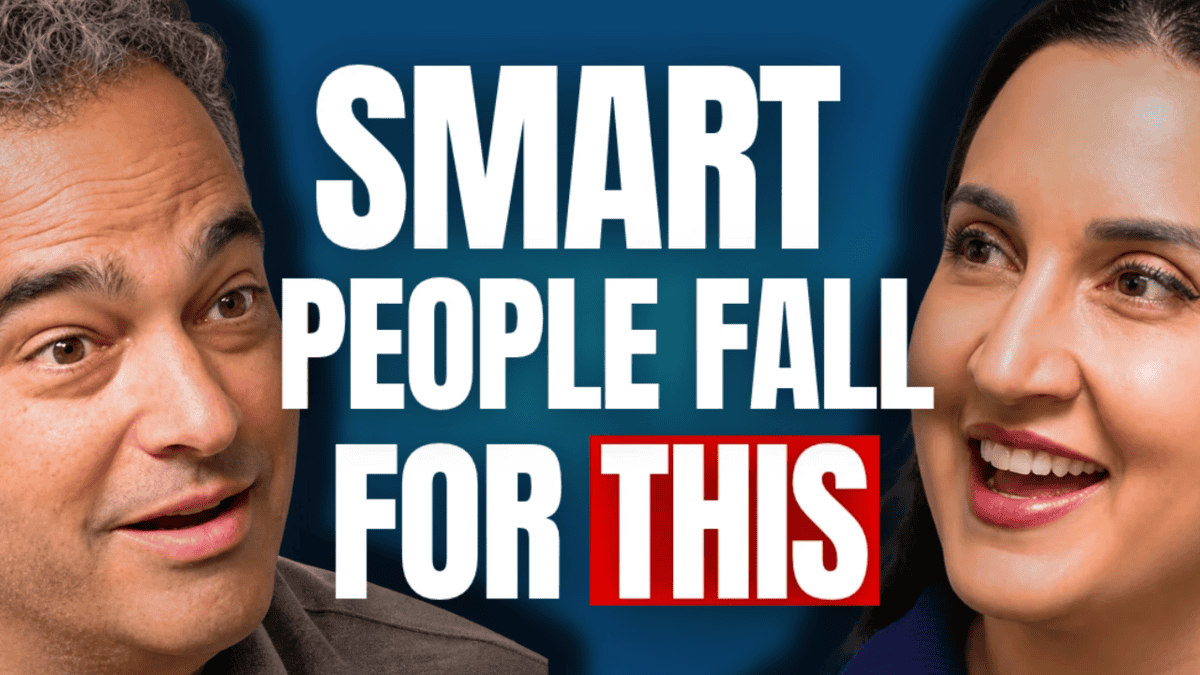
Recently, I invited a leading behavioral economist to meet me and, over a mug of hot honey tea, explain how Black Friday deals scramble our brain.
His name is Jeff Kreisler, and he’s a Princeton-educated lawyer who turned into a behavioral economist, much to the disappointment of his parents (I assume).
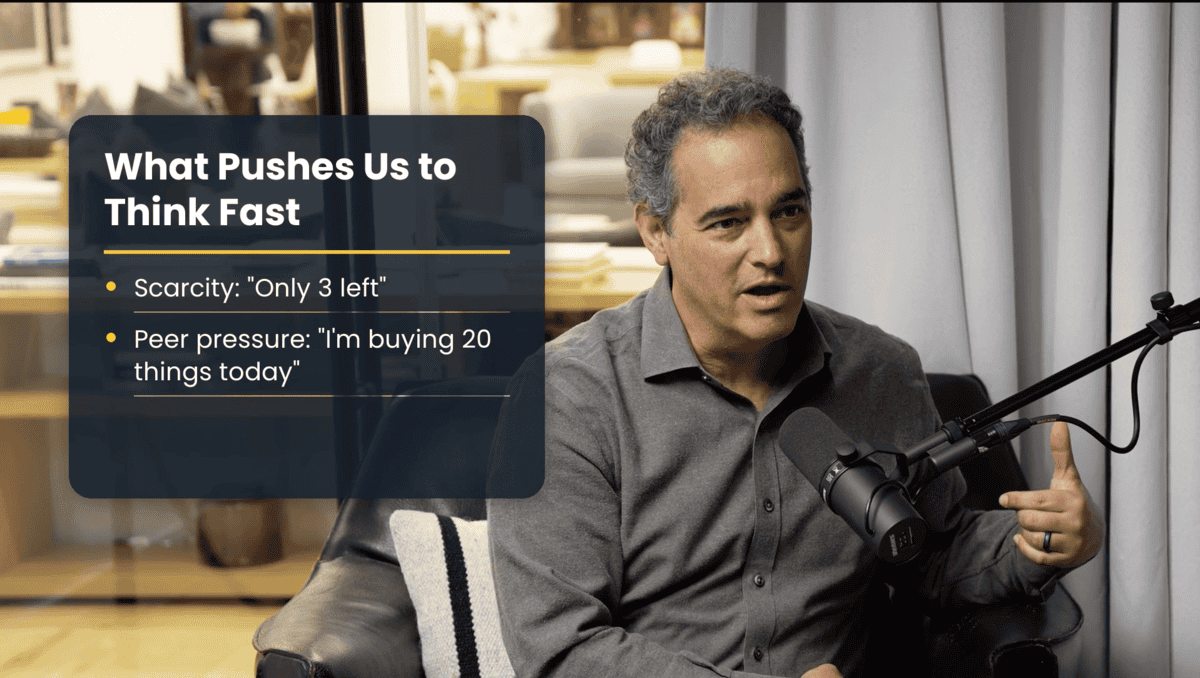
He explained that Black Friday forces us to think fast, not slow.
That’s borrowing from the work of Nobel Prize-winning researcher Daniel Kahneman*, who probably lectured his relatives over Thanksgiving dinner about Black Friday’s two biggest psychological traps.
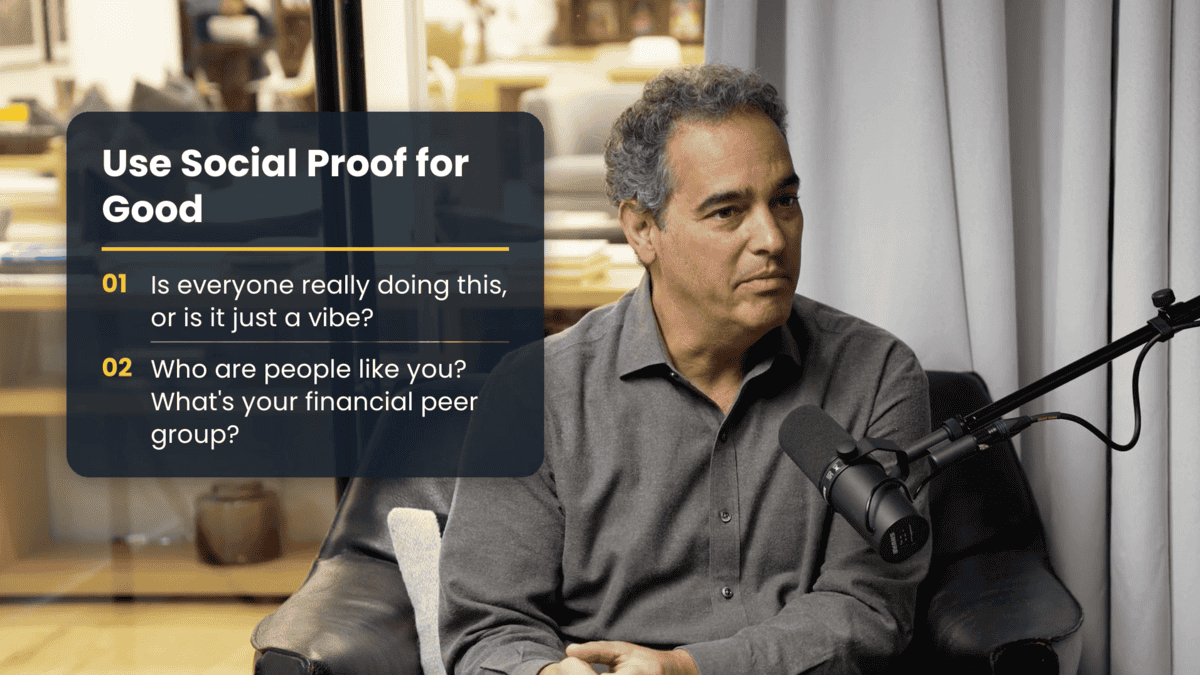
The first is social proof. We spend because we think other people are spending.
There are two cohorts of people who influence us: (1) Those who are like us, and (2) Those we aspire to be like.
If we think they’re buying furniture or bath towels or bedsheets, we’re more likely to do the same.
What’s funny is that we’re often wrong about our assumptions. We spend based on how we believe others are spending, whether or not that’s actually true.
The second psychological trap is relativity. A $100 jacket that’s marked down to $60 feels like a better deal than a jacket that just cost $60 to begin with.
That’s why when Ron Johnson became CEO of JCPenney and instituted “fair and square pricing” — he marked down items so that customers wouldn’t have to stack coupons or chase limited-time deals — customers revolted.
Their draw to JCPenney wasn’t about the absolute price. It was the psychological feeling of victory when they scored the deal.
When Johnson made the prices “fair and square,” — sure, customers paid the same amount, but they lost the feeling of a win.
That’s the concept of relativity. And it’s the cornerstone of both Black Friday and the JCPenney business model.
Anyway, CEO Ron Johnson was eventually ousted after steep sales declines, large losses, and a plunging stock price. Worse, he then appeared on my podcast, where I interrogated him over his failures and he was refreshingly honest and thoughtful and reflective.
Wait, what were we talking about? Right, relativity.
So those are the two major things that happen in our brain on Black Friday — (1) social proof and (2) relativity.
Relativity is made possible by anchoring. Our brains latch onto the first number we see — and this becomes our mental anchor, the reference point against which we judge the deal.
Think about it:
When you see “$1,000 marked down to $750,” your brain doesn’t evaluate $750 in isolation. It processes the “savings” of $250.
Anchoring works best when there are limitations — which appear in three forms:
1) Limited time (urgency)
2) Limited supply (scarcity)
3) The inevitability of prices rising forever because we live in a relentlessly inflationary world (mockery)
The hidden cost — when you’re focused on relativity / scarcity / urgency / anchoring — is that you’re not thinking about the most important bit, which is opportunity cost.
Opportunity cost means that you can afford anything but not everything.™️
When you’re thinking about the great deal on desks or houseplants or whatever it is you buy — you’re often not considering what else you could do with that money.
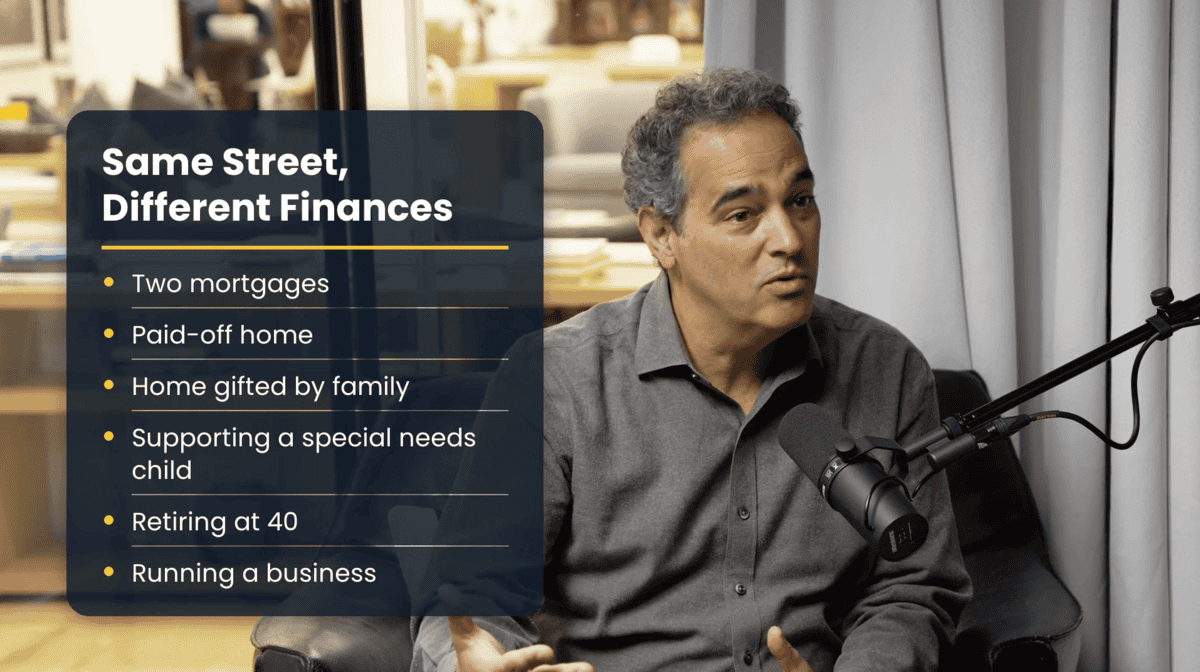
And when you’re focused on social proof — looking around your neighborhood at what other people are buying — you forget that the people you’re looking at have wildly different circumstances.
Some for the better. They’re doing super well and living below their means.
Others for the worse.
But much of their spending, their wealth, their financial circumstances are invisible.
That’s why it’s silly to compare ourselves — and yet it’s what we so naturally tend to do.
Holiday gifts in particular can hit harder than other sales campaigns.
Holiday gifts carry the job of trying to demonstrate love in a purchase — “If I don’t get GTA6, my kids will think I don’t care” — and when you pile that on top of scarcity / urgency / social proof, it’s not a surprise that people tend to overspend and impulsively spend during this season.
In our conversation, Jeff said — and I agree — not to stress out about the $10 purchase.
If it’s a small amount, if it’s a rounding error, then who cares? You don’t want to swing the pendulum too far to the Scrooge side.
The concern is either (1) Big ticket items, or (2) The aggregation of so many small and medium-ticket items that it cumulatively turns into too much.
(Hmmm there’s got to be a more succinct way to say that second one. Even the sentence itself is too much.)
He also said to go into Black Friday with an advance plan.
Theoretically, if you were to sit down in April — tax season — and try to map out your Black Friday spending, 7 months in advance, the only items you would think of are bulk purchases of consumables that you ordinarily use and that wouldn’t expire within a year.
Like sunblock.
But I’m assuming most of you aren’t buying bulk sunblock. (Although maybe you should be!)
When you start Black Friday shopping with an advanced plan of exactly what you’re going to purchase —
— plus a maximum budget of how much you’re going to spend on Black Friday, on Cyber Monday, as well as how much you’re going to give on Giving Tuesday —
— then you can actually enjoy that dopamine hit from hunting for deals, from the thrill of a great deal, just like the JCPenney shoppers wanted.
Because let’s admit it … There’s a slight joy when you spend $200 on groceries, but you see at the bottom of the receipt that you saved $1.12.
Anyway, the interview with behavioral economist Jeff Kreisler is hitting Spotify, Apple Podcasts and YouTube tomorrow. We haven’t released the episode yet.
You’re getting the sneak peek because you subscribe to the newsletter. Because you’re a cool insider like that.